
GST : 27AAFFV7667M1ZA

call images

Call us

08045801431

10 Best Insulation Membrane Suppliers Worldwide

Choosing among the 10 Best Insulation Membrane Suppliers Worldwide requires more than comparing product prices. A reliable supplier must demonstrate tested performance, manufacturing consistency, technical support, and experience in demanding climates. Insulation Membrane systems may control heat, moisture, air movement, or several risks together. Their performance depends on correct specification, installation, detailing, and long-term exposure.

Joseph Lstiburek, building scientist and founder of Building Science Corporation, has stated, “The perfect wall is the wall that has all the control layers on the exterior of the structure.” This principle remains useful when evaluating membrane suppliers. It encourages buyers to examine how each product manages water, vapor, air, and thermal transfer as part of a complete building assembly. A shiny datasheet is not enough.

Real project evidence matters.

The strongest manufacturers usually provide technical data, installation guidance, compatibility information, and independent testing. They may also explain limitations instead of promising universal results. That honesty is valuable. However, supplier claims can still vary by region, substrate, climate, and construction method. A membrane that performs well beneath a cold roof may not suit a humid façade or an exposed industrial wall.

This guide reviews leading global suppliers through practical criteria, including product range, certification, production capacity, research capability, customer support, and documented field use. The ranking should not replace professional design advice. It offers a clearer starting point for architects, contractors, distributors, and project owners seeking dependable Insulation Membrane solutions. Mistakes remain possible, especially when installation details are overlooked. That is why careful verification should accompany every purchasing decision.
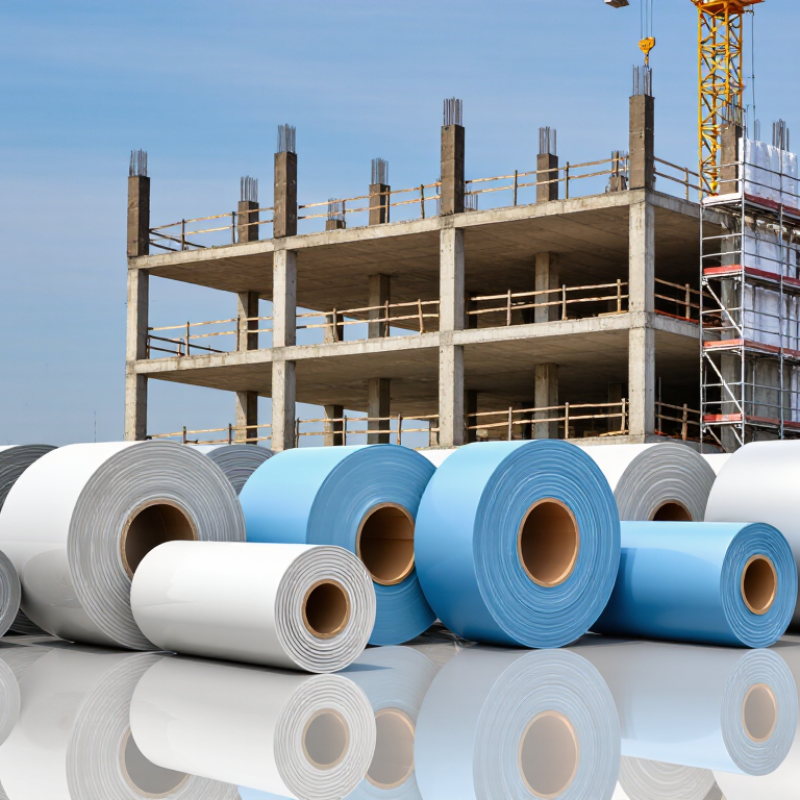
10 Best Insulation Membrane Suppliers Worldwide

Insulation Membrane Fundamentals: EN 13984, ASTM E96, and ISO 12572

Insulation membranes are judged by more than thickness or appearance. Reliable suppliers should explain how their products meet EN 13984, ASTM E96, and ISO 12572. These standards examine moisture behavior, but they do not mean exactly the same thing.

EN 13984 focuses on flexible plastic or rubber sheets used as vapour control layers. It helps specifiers review declared properties, durability, and manufacturing consistency. ASTM E96 measures water vapour transmission through a membrane. The result changes with temperature, humidity, specimen thickness, and test method. ISO 12572 also evaluates water vapour permeability under controlled conditions. Its test data supports hygrothermal design, especially when wall layers face different climates.

Ask each supplier for complete test reports, not only a single permeability value. Check the method, conditioning period, sample thickness, and laboratory accreditation. A membrane showing low transmission in one test may perform differently on a cold, windy site. I have seen drawings overlook sealed laps and service penetrations. Those small gaps can defeat excellent laboratory results.

Good technical documentation should include installation guidance, aging data, tensile strength, tear resistance, and batch traceability. It should also identify whether values are declared or measured. Comparing numbers from different standards can be misleading.

That part is easy to miss. Supplier selection becomes stronger when laboratory evidence, field experience, and project-specific moisture calculations support one another. Testing still has limits. Real buildings are less tidy than test chambers.

Global Supplier Selection Criteria: WVTR, R-Value, Fire Rating, and ISO 9001

Choosing among the 10 best insulation membrane suppliers worldwide requires more than comparing catalog prices. In field reviews, WVTR often exposes hidden risk. A low water-vapor transmission rate can protect roofs, cold rooms, and wall assemblies from trapped moisture. Ask for test conditions, specimen direction, aging data, and complete laboratory reports. Numbers without context are weak evidence.

R-value shows thermal resistance, but installation quality can reduce real performance. Check the declared R-value, thickness tolerance, compression behavior, and temperature range. Fire rating also needs careful review. Confirm the tested assembly, not only the membrane classification. A product may perform differently beside insulation, timber, or steel. ISO 9001 certification indicates controlled quality processes, but it does not guarantee every shipment is perfect. Audit records, traceability, corrective actions, and sample consistency. A neat spreadsheet can still mislead.

Tips: Request recent certificates and test reports. Compare WVTR units carefully. Visit the production site when possible. Keep a retained sample from each batch. Small details matter. I would also question unusually impressive claims; honest suppliers should explain limitations clearly. Selection becomes more reliable when technical evidence, factory experience, and independent verification support the same decision.

10 Best Insulation Membrane Suppliers Worldwide: Product and Market Profiles

10 Best Insulation Membrane Suppliers Worldwide: Product and Market Profiles

The ten suppliers in this global profile are assessed through product depth, testing evidence, production capacity, and market reach. Their ranges may include vapor-control membranes, waterproofing sheets, reflective insulation, and breathable roofing layers. Strong suppliers publish thickness, tensile strength, water resistance, fire behavior, and temperature limits. These details matter when a membrane faces wet masonry, sharp fasteners, or repeated seasonal movement.

The market remains varied. European manufacturers often emphasize energy efficiency and regulated construction performance. Asian producers may offer broad factory capacity and competitive volume pricing. North American suppliers frequently focus on advanced building envelopes and installation support. However, regional strengths overlap. A low price does not prove dependable performance. A polished datasheet does not replace independent testing. A ranking is never perfect.

Tips: Ask for recent test reports, batch traceability, installation manuals, and sample rolls before ordering. Confirm whether performance applies to the complete system, not only the membrane. Check storage conditions, adhesive compatibility, and expected delivery times. On a project site, small errors matter. A poorly sealed overlap can defeat an otherwise excellent product. Also, review certification dates carefully, because documents and formulations can change. Claims should be checked against applicable local standards and the building’s actual climate.

Technical Comparison Using ASTM E96, EN 13501-1, and EN 13984 Performance Data

10 Best Insulation Membrane Suppliers Worldwide

Technical Comparison Using ASTM E96, EN 13501-1, and EN 13984 Performance Data

Choosing among the world’s leading insulation membrane suppliers requires more than comparing price or thickness. ASTM E96 data shows how much water vapor passes through a membrane under controlled conditions. Lower permeability can help protect insulation in humid assemblies, but the correct value depends on climate and wall design.

EN 13501-1 classifies reaction to fire, including flame spread, smoke, and burning droplets. A higher classification may support safer building specifications, yet it does not replace a complete fire strategy. EN 13984 examines flexible sheets used for waterproofing and vapor control. Check declared properties, test methods, tolerances, and production consistency. A supplier with clear laboratory reports and traceable quality records deserves closer attention.

Tips: Request current test reports, not screenshots. Confirm whether values apply to the exact membrane thickness. Ask for installation guidance and independent certification. Small details matter.

Field experience often reveals gaps in laboratory comparisons. A membrane may perform well in ASTM E96 testing but fail after careless overlaps, punctures, or poor sealing. I have also found that impressive fire data can distract from weak mechanical performance. Compare tensile strength, tear resistance, joint design, and service temperature alongside the three standards. No single test tells the whole story, and supplier claims still need careful verification.

10 Best Insulation Membrane Suppliers Worldwide: Technical Comparison Framework

Supplier-neutral comparison of the measurable evidence required under ASTM E96, EN 13501-1, and EN 13984. No company or brand performance is inferred without verified product declarations and laboratory reports.

How to read this chart: ASTM E96 reports water-vapor transmission or permeance under stated test conditions; EN 13501-1 reports reaction-to-fire classification, including smoke and flaming-droplet subclasses where applicable; EN 13984 evaluates flexible sheets used for waterproofing or vapor control through applicable properties such as watertightness, tensile strength, tear resistance, and dimensional stability. These standards do not create a universal supplier ranking, so actual comparisons should use matching test conditions, declared values, and independent reports.

Applications, Compliance, and Lifecycle Value Across Major Building Sectors

Insulation membrane suppliers serving worldwide projects must prove more than thermal performance. Membranes are selected for roofs, walls, floors, and below-grade assemblies, where moisture movement can damage finishes and framing. In homes, a vapor-control layer may protect winter-heated rooms; in offices, airtightness can reduce drafts around service penetrations. Factories and warehouses often require tougher membranes, especially near heat, dust, or frequent maintenance traffic. Fit matters. Site experience shows that a technically strong product can fail when installers ignore laps, tapes, or substrate cleanliness.

Compliance should be checked against the project location, building type, and assembly design, not copied from a generic data sheet. Responsible suppliers provide declared thermal values, vapor resistance, fire behavior, emissions information, and installation guidance. Independent testing helps, but certificates still need verification for scope, date, and intended use. Designers should also review condensation risk, wind exposure, ultraviolet exposure during construction, and compatibility with sealants. Small omissions become expensive.

Lifecycle value includes more than purchase price. A membrane that installs quickly, tolerates movement, and remains inspectable may lower labor and repair costs over decades. During renovation, products should support careful removal and avoid trapping moisture behind upgraded insulation. Procurement teams can compare service life evidence, replacement access, packaging waste, and technical support alongside cost. Still, lifecycle forecasts are uncertain; climate, workmanship, and future alterations can change the result. That uncertainty deserves honest allowances, not polished promises.

10 Best Insulation Membrane Suppliers Worldwide - Applications, Compliance, and Lifecycle Value Across Major Building Sectors
Rank Anonymous Supplier Profile Primary Supply Region Typical Membrane Portfolio Main Building Sectors Typical Applications Relevant Compliance Frameworks Indicative Service-Life Potential Lifecycle-Value Strength
1 Profile A — Integrated Roofing Membrane Producer Europe and neighboring export markets Polymer-modified bituminous sheets, vapor-control layers, roof underlays Commercial, industrial, residential Flat roofs, pitched roofs, podium decks, roof refurbishments EN 13969, EN 13970, EN 13859-1, EN 1928, applicable fire-classification rules 25–40 years when correctly specified and maintained Broad system compatibility, established detailing practice, and strong refurbishment suitability
2 Profile B — Synthetic Single-Ply Specialist North America and global project channels PVC, TPO, or flexible polyolefin roofing membranes; walkway and protection sheets Logistics, retail, manufacturing, public buildings Large low-slope roofs, mechanically fastened systems, adhered roof assemblies ASTM D4434, ASTM D6878, ASTM D4637, FM or equivalent project approvals where required 20–35 years, subject to formulation and exposure Fast installation, reduced joint count on wide rolls, and strong performance on extensive roof areas
3 Profile C — Below-Grade Waterproofing Specialist Western Europe and Middle East project markets Self-adhered sheets, bentonite composites, protection membranes, drainage layers Infrastructure, commercial, residential, underground transport Basements, retaining walls, tunnels, water-retaining structures EN 13969, EN 15814 where applicable, EN 1928, ASTM D6134 or project-specific waterproofing criteria 30–50 years when protected from mechanical damage Prevents costly water ingress, supports phased construction, and lowers remedial-repair risk
4 Profile D — High-Performance Air and Vapor Control Producer Northern Europe and cold-climate export markets Variable-permeability membranes, airtightness layers, reinforced vapor barriers Low-energy housing, timber construction, institutional buildings Warm roofs, wall systems, loft conversions, passive-building envelopes EN 13984, EN 12114, EN 1023, national airtightness and hygrothermal requirements 30–50 years inside a protected building envelope Controls moisture migration, reduces heat loss, and helps protect insulation from condensation
5 Profile E — Reflective and Energy-Efficient Roof Membrane Supplier Asia-Pacific and tropical export markets Light-colored single-ply membranes, reflective coatings, radiant-barrier laminates Warehousing, retail, data facilities, hot-climate housing Cool roofs, rooftop plant areas, insulated metal buildings, retrofit overlays ASTM C1549, ASTM E1980, ASTM D6878, local energy-code and fire-performance provisions 15–30 years depending on UV exposure and maintenance Can reduce roof-surface temperature and cooling demand in suitable climates
6 Profile F — Liquid-Applied Membrane Formulator Global distribution with regional manufacturing Polyurethane, acrylic, PMMA, and cementitious waterproof coatings Renovation, balconies, parking structures, commercial buildings Complex geometries, penetrations, roof repairs, wet-room and deck waterproofing EN 1504-2, ETAG/EAD-based assessments where applicable, ASTM C836, VOC regulations 10–25 years before major renewal, system-dependent Seamless detailing, minimal demolition, and strong adaptability for irregular substrates
7 Profile G — Geosynthetic and Civil-Engineering Membrane Supplier North America, Europe, and large infrastructure markets HDPE, LLDPE, PVC geosynthetic liners, geotextiles, drainage composites Landfill, mining, water infrastructure, transportation Containment cells, reservoirs, canals, tunnels, green infrastructure GSI test methods, ASTM D7176, ASTM D4437, ISO 9001 quality systems, project specifications 50–100+ years in buried or protected applications High chemical resistance, low permeability, and strong containment performance
8 Profile H — Green-Roof and Root-Resistant Membrane Supplier Central Europe and urban-development markets Root-resistant waterproofing sheets, drainage boards, protection fleece Residential, commercial, public realm, mixed-use developments Extensive and intensive green roofs, terraces, roof gardens EN 13969, EN 1297, FLL root-resistance guidance, local green-roof standards 30–50 years when protected beneath the green-roof build-up Supports stormwater management, biodiversity objectives, and membrane protection from UV exposure
9 Profile I — Insulated Panel and Metal-Building Envelope Supplier East Asia and international manufacturing hubs Laminated vapor barriers, facing films, sealing tapes, panel-joint membranes Factories, cold stores, agricultural buildings, modular construction Insulated sandwich panels, cold-room envelopes, modular wall and roof systems EN 14509, EN 13162 or EN 13165 depending on insulation type, ISO 6946, fire-test requirements 20–40 years within a sealed panel system Factory-controlled assembly, reduced installation time, and improved air and moisture control
10 Profile J — Sustainable and Recycled-Content Membrane Supplier Global sustainability-focused construction markets Recycled-content polyolefin sheets, recyclable protection layers, low-VOC coatings Green building, public projects, commercial renovation Roofing, basement protection, façade interfaces, temporary weatherproofing EN 15804 environmental declarations, ISO 14001, ISO 14025, applicable EN or ASTM product standards 15–35 years depending on product and exposure Lower embodied-impact potential, documentation for green-building credits, and improved end-of-life planning
Data note: Service-life figures are indicative ranges for properly designed, installed, protected, and maintained membrane systems. Actual performance depends on membrane formulation, climate, substrate movement, exposure, workmanship, drainage, inspection, and local code requirements. Compliance references identify commonly applicable standards and should be verified against the specific product technical documentation and project jurisdiction.
Back to top
