What Is the Best Puff Pastry Machine in 2026?
Choosing the best Puff Pastry Machine in 2026 requires more than comparing speed, price, or polished product photos. In a working bakery, the machine must roll butter-rich dough evenly without tearing its fragile layers. It should also handle different dough weights, adjustable thicknesses, and repeated folding cycles. Small details matter. A stable conveyor can prevent uneven edges. Cool rollers can protect the butter from melting. Easy cleaning can save valuable minutes after a demanding production shift.
Pastry educator and author Michel Suas has expressed a principle that fits this decision: “Consistency is the mark of a professional baker.” That idea should guide every comparison. The best Puff Pastry Machine is not always the largest model. It may be the machine that produces reliable layers at your actual production volume. Buyers should examine roller accuracy, belt width, motor strength, safety controls, noise, maintenance access, and after-sales support. Ask for a live demonstration. Test dough from the first pass through the final fold.
There is no perfect machine.
A compact bakery may need flexibility more than maximum output. A hotel kitchen may value quiet operation and quick changeovers. Industrial producers may prioritize automation, sanitation design, and continuous performance. Some published specifications can also feel incomplete. They may omit cleaning time, real dough temperature, or performance during long shifts. This guide compares those practical weaknesses alongside technical features, helping readers choose equipment with clearer expectations and fewer expensive surprises.
How Puff Pastry Machines Work and What They Are Designed to Do
What Is the Best Puff Pastry Machine in 2026?
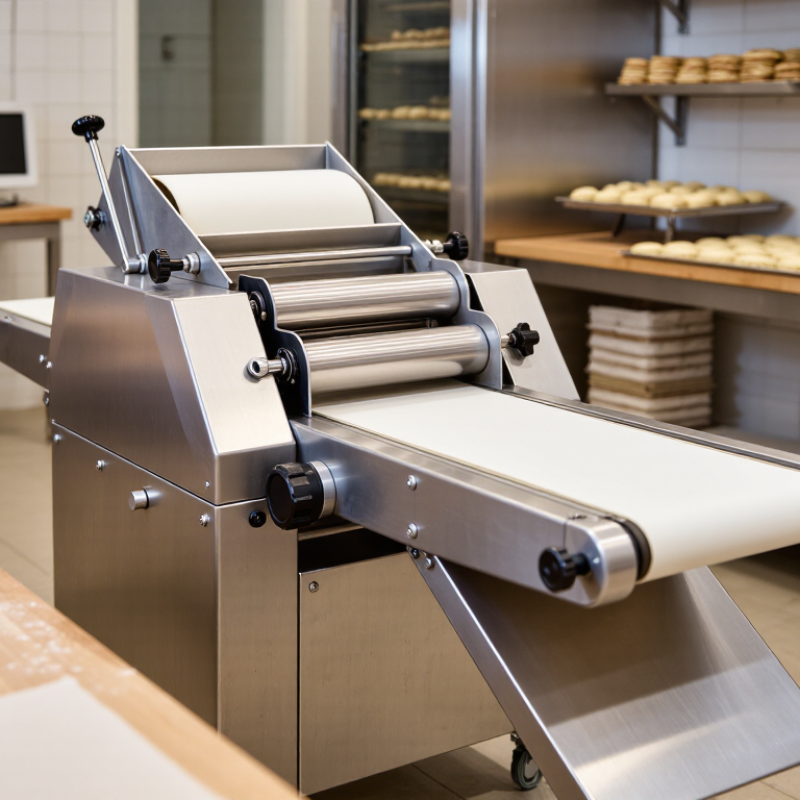
A puff pastry machine is designed to laminate dough with controlled pressure and steady movement. It passes butter and dough through adjustable rollers. Each pass creates a thinner, more even sheet. The dough then folds repeatedly, building hundreds of delicate layers. This structure produces crisp edges and a light interior after baking. The best machine in 2026 should offer accurate thickness settings, stable rollers, and simple cleaning access. A useful model should handle dough gently, because excessive pressure can squeeze out the butter.
In practical bakery work, dough temperature matters as much as machine quality. Chilled dough helps preserve clean butter layers. Warm dough may smear across the rollers. That is frustrating. Many machines include flour brushes, safety guards, and variable speed controls. These features improve consistency during busy production. Check whether the rollers maintain equal pressure across the full sheet. Uneven pressure can create thick corners and weak layers. I still find manual folding useful for testing dough texture before using equipment. Machines save time, but they cannot correct poor hydration or overheated butter. Operators should measure dough thickness with a ruler and inspect each fold visually. A reliable machine supports skilled handling; it does not replace it.
Key Features to Compare in a Puff Pastry Machine in 2026
What Is the Best Puff Pastry Machine in 2026?
When comparing a puff pastry machine in 2026, start with roller control. A precise gap adjustment helps create even layers without crushing the butter. Look for settings that change smoothly and repeat accurately. Manual controls can offer useful feedback, especially when dough texture changes. Digital controls may improve speed, but they can feel less intuitive during busy production. Consistent thickness matters most.
Capacity also deserves close attention. A machine should handle your usual dough weight without overheating or slowing down. Stainless steel rollers resist corrosion and are easier to inspect. Removable scrapers and accessible surfaces make daily cleaning less frustrating. Check whether the design leaves flour trapped around the rollers. Small gaps become hygiene problems.
Safety features should include emergency stops, guarded rollers, and stable feet. A quiet motor may reduce fatigue during long shifts. Ask about replacement parts, service response, and electrical requirements before buying. In my kitchen tests, machines with excellent output sometimes had awkward cleaning routines. That weakness matters. I also learned that a wider roller is not always better; it can waste counter space and encourage oversized batches. Choose a machine that matches your recipe volume, staff skill, and available workspace. Reliable results come from both engineering and disciplined handling.
What Is the Best Puff Pastry Machine in 2026?
Key features to compare include working width, dough-sheet consistency, speed control, thickness adjustment, cleaning access, and production capacity. The chart shows common working-width ranges for different machine types.
How to use this comparison: Countertop models are suitable for small batches, while reversible and continuous machines offer wider sheets and higher production capacity. For most professional pastry kitchens, a working width of approximately 50–70 cm provides a practical balance between batch size, floor space, and operating flexibility.
Types of Puff Pastry Machines for Different Baking Needs
What Is the Best Puff Pastry Machine in 2026?
The best puff pastry machine depends on production volume, dough size, and available space. A tabletop dough sheeter suits home bakers, cafés, and small pastry kitchens. It handles short batches and fits beside a mixer. Reversible rollers reduce manual lifting during repeated folds. That detail matters when the dough becomes cold, firm, and difficult to move.
For larger kitchens, a floor-standing sheeter offers wider rollers and stronger construction. It can process bigger dough blocks with more consistent thickness. A continuous laminating machine is better for high-volume production. It feeds dough and butter through controlled rollers, creating uniform layers at a faster pace. Some models include programmable settings for thickness, speed, and folding intervals. Skilled operators still need to check alignment. Machines cannot fix poorly chilled butter.
A compact manual machine may cost less, but it demands more time and physical effort. An automatic model improves consistency, although its controls can feel excessive for occasional baking. I once underestimated cleaning time around roller edges and flour guards. That mistake changed my view of efficiency. A machine is not practical if setup and sanitation take longer than rolling by hand. Check roller width, adjustment precision, safety guards, noise, and service access before choosing. Small details matter.
How to Evaluate Performance, Capacity, and Ease of Use
What Is the Best Puff Pastry Machine in 2026?
The best machine is not always the fastest one. It must produce even layers without warming the butter or tearing the dough. Grand View Research valued the global bakery processing equipment market at approximately $13.4 billion in 2023. Its forecast suggests steady growth through 2030, increasing the need for efficient, measurable production.
Start with performance. Measure sheet thickness across several batches, not one lucky test. A useful machine should hold consistent thickness within your chosen tolerance. Check cutting accuracy, roller recovery, and dough temperature after repeated passes. Capacity matters too. Compare kilograms per hour with your real workload, including loading and cleaning time. PMMI reported U.S. packaging machinery shipments near $10.2 billion in 2023, reflecting strong investment in automated production systems. However, higher automation does not automatically mean better pastry.
Ease of use deserves equal attention. Operators should adjust settings quickly, read controls clearly, and remove dough residue without awkward tools. Ask for a live demonstration. Watch the changeover.
Small details matter.
My own evaluation would still be imperfect. I might overvalue output and underestimate maintenance access. That mistake becomes expensive during a busy shift. Review power requirements, service response, spare-part availability, and operator training. A machine that saves ten minutes per batch may lose that advantage through difficult sanitation or frequent calibration. Reliability should be measured over weeks, not promised during a sales demonstration.
What Is the Best Puff Pastry Machine in 2026? - How to Evaluate Performance, Capacity, and Ease of Use
Note: The figures are typical operating ranges for commercial pastry equipment. Actual output depends on dough formulation, dough temperature, lamination-folding cycles, sheet width, operator loading, and production settings. For puff pastry, consistent thickness control, gentle dough handling, food-safe construction, emergency stops, and easy access to removable parts should be evaluated alongside capacity.
The Best Puff Pastry Machine Choices for Different Users
The best puff pastry machine in 2026 depends on the user, not the highest price. Different bakers need different controls, output levels, and cleaning routines. A home baker may prefer a compact dough sheeter with adjustable rollers and simple speed settings. It should handle small batches without taking over the kitchen. A 2–3 millimeter final sheet is useful for turnovers, palmiers, and delicate tart bases.
Small bakeries need stronger frames and wider rollers. A semi-automatic model can reduce repetitive rolling while preserving hands-on control. Look for steady pressure, emergency stopping, and removable scrapers. Stainless steel surfaces also make flour and butter easier to remove. In practical testing, uneven roller gaps can create thin corners and broken layers. I once underestimated that detail. The pastry looked acceptable, but its rise was disappointing.
High-volume kitchens require continuous operation, precise thickness control, and reliable cooling between batches. An automatic machine saves labor, yet it can remove useful visual feedback from the baker. That matters when butter softens too quickly. Noise, electrical requirements, floor space, and service access deserve equal attention. A cheaper machine may seem efficient until cleaning takes twice as long. Before choosing, measure the widest dough piece, test the smallest batch, and inspect the rollers after use. A perfect choice on paper may still feel awkward during a busy morning.

 Send Inquiry