China Top 10 Aluminium Heat Dissipation Manufacturers
Choosing a reliable supplier matters when heat control affects product life, safety, and operating costs. China’s Aluminium Heat Dissipation industry serves LED lighting, electric vehicles, power electronics, telecommunications, and industrial automation. This guide introduces ten manufacturers with different production strengths, including extruded profiles, die-cast housings, skived fins, CNC machining, and custom thermal modules.
The comparison considers practical evidence rather than marketing claims alone. Key factors include thermal resistance, alloy selection, dimensional accuracy, surface treatment, tooling capability, quality control, and production capacity. Certifications such as ISO 9001 may support confidence, but they do not replace sample testing. Buyers should also review inspection reports, packaging methods, lead times, and communication during technical discussions. A strong factory can explain fin spacing, contact surfaces, airflow direction, and expected temperature performance in clear terms.
Details matter.
Some manufacturers specialize in high-volume standard profiles. Others handle small batches with complex drawings and tight tolerances. Their strengths may change with material prices, equipment upgrades, or management decisions. Therefore, this ranking should not be treated as a permanent verdict. That would be too simple. Independent validation remains sensible, especially for projects involving battery packs, medical devices, or high-power electronics. By examining capabilities, applications, engineering support, and customer feedback, readers can build a more realistic supplier shortlist and reduce avoidable procurement risks.
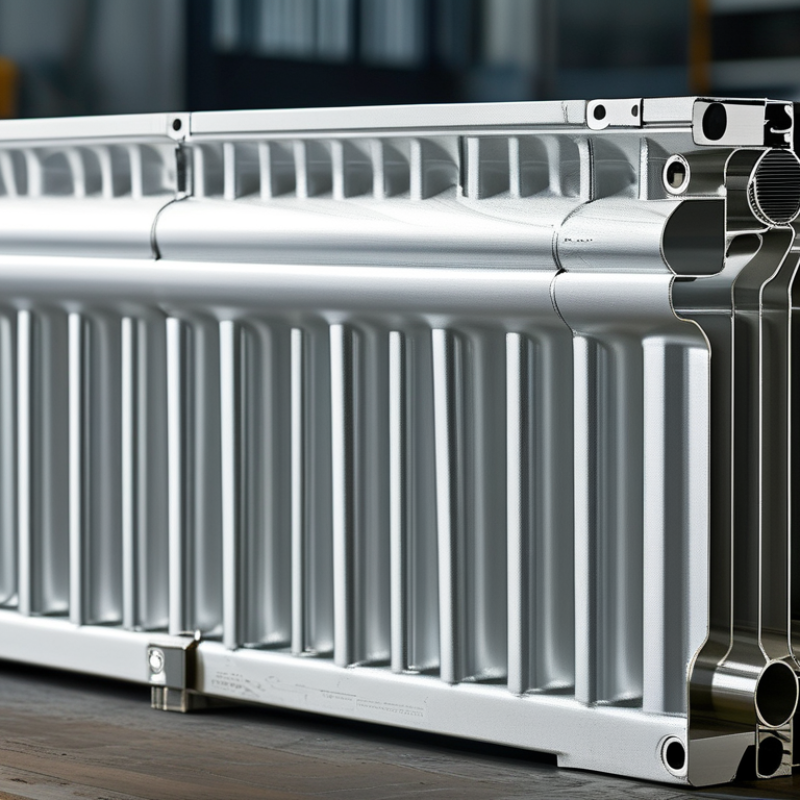
Aluminium Heat Dissipation Manufacturing in China: Industry Overview
China Top 10 Aluminium Heat Dissipation Manufacturers
Aluminium heat dissipation manufacturing in China covers extrusion, die casting, CNC machining, and surface treatment. Many suppliers serve electric vehicles, industrial controls, LED lighting, telecom equipment, and data systems. Their work often begins with alloy selection and thermal design. Common materials include 6063 aluminium for extruded profiles and higher-strength alloys for structural housings.
Experienced manufacturers control fin spacing, wall thickness, flatness, and contact surfaces. A small dimensional error can increase thermal resistance. Production teams usually combine extrusion presses, precision saws, CNC equipment, and anodizing lines. Quality engineers inspect samples with coordinate measuring machines. They also test thermal performance under controlled airflow and power loads. These records matter more than attractive catalog claims.
Real projects are rarely perfect. A compact heat sink may cool efficiently but remain difficult to assemble. Thin fins can improve airflow, yet they may deform during transport. Some suppliers still depend too heavily on visual inspection. That assumption can fail. Reliable evaluation should include material certificates, process samples, tolerance reports, and repeat thermal tests. Buyers should also check packaging, traceability, and communication during design changes. China’s leading manufacturers are not defined by equipment alone. Their practical value appears in stable production, honest reporting, and the ability to correct weak designs.
Key Criteria for Evaluating the Top Ten Manufacturers
China Top 10 Aluminium Heat Dissipation Manufacturers
For China’s top ten aluminium heat dissipation manufacturers, ranking should begin with measurable thermal performance, not export volume. The International Aluminium Institute reported global primary aluminium production of about 72.9 million tonnes in 2024. This scale indicates a broad but uneven supply base. Buyers should request alloy certificates, conductivity results, and batch traceability. Standard 6063 aluminium can provide approximately 200 W/m·K, but temper, impurities, and surface treatment may affect actual performance.
A credible manufacturer should provide thermal resistance tests under defined airflow, contact pressure, and ambient temperature. Independent laboratory reports carry greater weight than attractive datasheets. Inspect extrusion tolerances, fin geometry, flatness, burr control, and anodising thickness. ISO 9001 supports process management. It does not prove that a heatsink performs well. Request sample inspection records and repeated test results. Small details matter.
The IAI Aluminium Sector Greenhouse Gas Pathways report states that recycled aluminium requires about 5% of the energy used for primary production. Therefore, recycled content, scrap segregation, and energy records deserve review. Also examine tooling lead time, rejection rates, packaging, and corrective-action speed. I would avoid rigid rankings when evidence is incomplete. That is an uncomfortable point. A quieter supplier with transparent test data may be safer than a louder competitor. A reliable top-ten evaluation should combine factory audits, verified samples, lifecycle data, and customer references under comparable thermal loads.
China Top 10 Aluminium Heat Dissipation Manufacturers
Key Criteria for Evaluating the Top Ten Manufacturers
The chart presents a practical 100-point evaluation framework for comparing aluminium heat-dissipation manufacturers. Thermal performance, dimensional consistency, alloy and process capability, surface treatment, corrosion resistance, and quality traceability receive the highest weighting because they directly affect heat-transfer efficiency, service life, and production reliability.
Comparison of Products, Technologies, and Production Capabilities
China’s top ten aluminium heat dissipation manufacturers differ sharply in product focus, engineering depth, and factory scale. A useful comparison begins with the component, not the catalogue. Extruded heat sinks suit LED housings, power supplies, and compact control cabinets. Die-cast parts offer complex shapes, while CNC finishing improves mounting accuracy. Cold plates demand tighter flatness and reliable internal channels. Small details matter.
Fin height, spacing, alloy selection, and surface treatment directly affect thermal resistance. Common alloys include 6063 for clean extrusion and 6061 for stronger structural sections. Anodizing can improve corrosion resistance, but it does not replace proper thermal testing. Some suppliers quote impressive conductivity figures without showing test conditions. That gap deserves scrutiny. Technology comparisons should include simulation, tooling, friction-stir welding, vacuum brazing, and automated inspection. Simulation helps identify hot spots before cutting production dies. However, a model is only as credible as its material data and boundary assumptions.
Production capability appears in extrusion tonnage, die libraries, machining cells, and monthly capacity. Stable suppliers record batch numbers, dimensional reports, alloy certificates, and thermal test results. Ask for sample approval procedures. Then compare pilot delivery with repeat orders. Many factories perform well on prototypes but struggle with consistent volume output. Liquid cooling components require stronger leak testing and cleaner process control than ordinary finned profiles. Export experience also matters because packaging, documentation, and compliance records affect reliability. Still, no ranking remains permanent. Capacity can change after a new press, labor shortage, or material price shift. A test sample can mislead.
Applications and Selection Factors for Aluminium Heat Dissipation Solutions
Aluminium heat dissipation solutions support LED lighting, electric vehicles, industrial controls, telecom equipment, and compact computing systems. Their light weight helps reduce structural load, while high thermal conductivity moves heat away from sensitive components. In practice, engineers often use extruded heat sinks for standard assemblies. Machined or bonded designs suit unusual shapes and limited installation space. A small workshop test can reveal more than a polished catalogue.
Selection should begin with the actual heat load, not the material name. Measure the component’s wattage, operating temperature, airflow, and available mounting area. Fin spacing matters. Narrow fins can perform well with forced air, but they may collect dust in passive systems. Check surface treatment, dimensional tolerance, corrosion resistance, and contact flatness. Poor contact between the heat sink and device can waste an otherwise excellent design. Thermal interface materials also need suitable thickness and long-term stability.
For China’s top aluminium heat dissipation manufacturers, buyers should assess production experience, testing equipment, quality records, and engineering support. Ask for thermal test data under conditions similar to the final application. Confirm alloy grade, temper, finishing method, and batch consistency. Cost comparisons should include tooling, machining, inspection, and delivery risks. Not every supplier will provide complete evidence. That is a warning, though not always a rejection. A prototype run, temperature mapping, and a basic failure review can expose assumptions before full production.




 Send Inquiry

