
A flat tire rarely waits for a convenient moment. It may happen beside a dark highway, during heavy rain, or outside a nearly empty parking lot. In those minutes, a well-maintained Spare Tire can provide more than mobility. It can provide time, control, and a safer decision.
The National Highway Traffic Safety Administration has linked tire-related problems to roughly 11,000 crashes and about 200 deaths annually, based on older national estimates. That figure is dated, but the warning remains relevant. The U.S. Tire Manufacturers Association recommends checking tire pressure monthly and before long trips. That advice should include the spare, although many drivers forget it. John Ibbotson, chief mechanic at Consumer Reports, explains, “A spare tire is an emergency tool, not a permanent replacement.” Drivers should confirm its pressure, inspect the sidewall, understand its speed limit, and locate the jack before trouble begins. They should also know whether their vehicle carries a full-size spare, a temporary compact spare, or only an inflation kit.
Small details matter. A rusty jack may fail. A locked wheel key may be missing. A spare stored under the vehicle may be covered with road grime. Seven practical tips can reduce these surprises, though no checklist removes every risk. Even experienced drivers can overlook one step. That is why this guide focuses on preparation, safe installation, limited driving, and honest judgment when roadside conditions become unsafe.
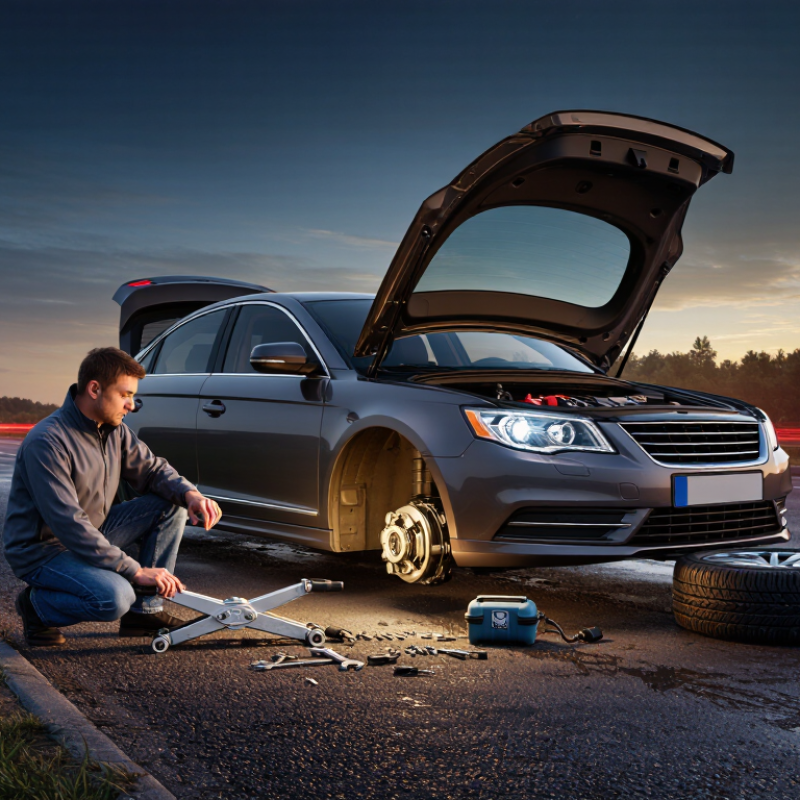
Spare tires are not interchangeable, and their limitations matter more than appearance. A full-size matching spare usually handles normal speeds, but it still needs regular inspection. A full-size nonmatching spare may alter braking, steering, or traction. A temporary donut is smaller, lighter, and designed only for short emergency use. Run-flat systems are different; they are not spare tires.
Check the sidewall before driving. Many temporary spares require about 60 psi, according to guidance from the U.S. National Highway Traffic Safety Administration (NHTSA). Their common limit is 50 mph, often for no more than 50 miles. Your vehicle manual overrides general advice. Never assume.
Inspect pressure monthly, when the tire is cold. The U.S. Tire Manufacturers Association notes that tires can lose about 1 psi each month and roughly 1 psi for every 10°F temperature change. Keep the valve cap fitted. Examine the tread, sidewall, wheel, jack, and wrench. A spare without tools is only half a solution.
If the puncture is on a driven axle, follow the manual carefully; some vehicles require moving a regular wheel. Avoid sudden braking and tight cornering. Do not tow with a temporary spare. Do not mix it casually with all-wheel-drive systems.
One uncomfortable detail: a spare can look clean while aging in a hot trunk. I would not trust appearance alone. Replace damaged or expired equipment before an emergency, not during one.

A spare tire can look untouched and still fail when you need it. I used to check only the four tires on the ground. That habit was careless. Now I inspect the spare every month, especially before long trips.
Start with the pressure. Check it when the tire is cold, using the vehicle’s placard or owner’s manual. Compact spares often require higher pressure than regular tires. A soft spare may not support the vehicle safely.
Look closely at the sidewall for cracks, cuts, bulges, or deep discoloration. Run your fingers over suspicious areas, but do not use a damaged tire.
Inspect the tread for uneven wear, exposed cords, or objects lodged in the grooves. Check the valve stem and rim for corrosion or bending. Find the tire’s manufacturing date, then follow the replacement guidance in the manual. Age matters, even when the tread looks good.
Do not forget the jack, wrench, adapter, and locking key if your vehicle uses one. I once found a usable spare with a missing wrench. It was a frustrating discovery in a driveway, not on a dark roadside.
Keep the equipment secured, dry, and easy to reach. Practice removing the spare once, slowly. You may discover a problem sooner.
A flat tire becomes dangerous when preparation is missing. The National Highway Traffic Safety Administration estimates that tire-related failures cause about 11,000 crashes annually in the United States. Keep a properly inflated spare, wheel wrench, jack, gloves, flashlight, and warning triangles in the vehicle. Check the spare’s pressure monthly. It may lose air while untouched.
Move onto firm, level ground when possible. Turn on hazard lights, engage the parking brake, and keep passengers away from traffic. Set warning triangles behind the vehicle. Do not work beside fast-moving traffic. Loosen each wheel nut slightly before lifting the vehicle. Place the jack only at the approved lifting point. A crushed rocker panel is an expensive mistake.
Raise the vehicle until the tire clears the ground. Replace it, tighten the nuts by hand, then lower the vehicle slowly. Tighten in a crisscross pattern with a torque wrench whenever possible. Check the spare’s sidewall for speed and distance limits. Temporary spares are not normal tires. Drive gently to a repair facility. NHTSA crash data shows why rushing matters, though I still sometimes forget the flashlight. That small oversight can turn a simple repair into a cold, unsafe search beside the road.
Check the pressure of all tires, including the spare, at least once a month when the tires are cold. Before changing a tire, park on firm, level ground, turn on the hazard lights, and follow the vehicle owner’s manual. Temporary spare limits vary, so check the spare’s sidewall and your manual.
Choose firm, level ground away from traffic, then switch on the hazard lights. Set the parking brake and select Park, or first gear in a manual car. Place wheel wedges or sturdy blocks against a tire that will stay on the ground. Check the owner’s manual for the correct jack point; vehicle designs differ. Take out the spare, jack, and wrench. A little preparation helps.
With the car still on the ground, loosen the flat tire’s lug nuts about half a turn. Do not remove them yet. Position the jack at the specified lifting point and raise the vehicle until the flat tire clears the ground. Never put any part of your body beneath a car supported only by a jack. Remove the nuts and wheel, then fit the spare onto the hub. Hand-tighten the nuts in a star pattern so the wheel sits evenly. Lower the car until the tire touches the ground, tighten the nuts again in the same pattern, then lower fully and remove the jack. I have seen rushed tightening leave one nut noticeably loose; check each one. Use the manual’s torque specification with a torque wrench as soon as possible. Check the spare’s pressure, observe its speed and distance limits, and arrange a full-tire repair or replacement.
A spare tire is a safety tool, not a permanent replacement. The National Highway Traffic Safety Administration reported 664 deaths from tire-related crashes in 2020. That figure makes routine tire checks difficult to dismiss. Check the spare’s pressure monthly, inspect its sidewall, and confirm the jack and lug wrench are present. A missing tool can turn a simple puncture into a roadside emergency.
When a tire fails, slow down smoothly and stop on firm, level ground. Turn on hazard lights, engage the parking brake, and keep passengers away from traffic. Never work beneath a vehicle supported only by a jack. Use the manufacturer’s lifting points, tighten the lug nuts in a star pattern, and check them again after driving briefly. The American Automobile Association has reported that millions of drivers experience flat tires, while many lack confidence changing one. Practice matters.
Temporary spares usually have strict speed and distance limits. Read the sidewall and vehicle handbook before moving. Drive directly to a qualified tire shop. Replace or repair the damaged tire promptly, because a compact spare can affect braking, handling, and stability. Check the spare’s pressure again after installation. I once treated a warning light as a minor nuisance; that was poor judgment. Tire pressure changes with temperature, and memory is unreliable. Keep a pressure gauge in the vehicle, and review the spare before every long trip.
| No. | Key Tip | Why It Matters | Recommended Action | Useful Check or Limit | Safety Reminder |
|---|---|---|---|---|---|
| 1 | Check the spare tire regularly | A spare tire can lose air while stored and may become unusable before it is needed. | Inspect the spare tire, wheel, valve stem, and storage area during routine vehicle maintenance. | Check at least monthlyAlso inspect before long trips. | Do not assume a spare is ready simply because it has never been used. |
| 2 | Inflate it to the correct pressure | Incorrect inflation can reduce handling, braking performance, and tire stability. | Use a reliable tire-pressure gauge and inflate the spare according to the vehicle handbook or the tire information label. | Follow the specified pressureThe spare may require a different pressure from the regular tires. | Check pressure when the tire is cold for a more accurate reading. |
| 3 | Know which type of spare you have | Temporary compact spares are designed for limited use and may have different speed and distance restrictions. | Identify whether the vehicle has a full-size spare, temporary spare, or run-flat system before an emergency occurs. | Temporary spares often have speed and distance limitsUse the limits printed on the tire sidewall and in the handbook. | Never exceed the lowest applicable speed or distance limit. |
| 4 | Replace the damaged tire promptly | A spare is an emergency solution, not a permanent replacement for a regular road tire. | Arrange tire repair or replacement as soon as possible after installing the spare. | Replace promptlyDo not continue normal driving on a temporary spare. | A temporary spare can affect cornering, traction, braking, and electronic safety systems. |
| 5 | Install the spare in a safe location | Changing a tire near moving traffic creates a serious risk of collision. | Move to firm, level ground away from traffic when possible. Turn on hazard lights and apply the parking brake. | Use warning devices where legal and appropriateKeep passengers away from the roadway. | Do not attempt a roadside change if the location is unsafe; contact roadside assistance. |
| 6 | Secure the wheel nuts correctly | Loose or unevenly tightened wheel nuts can allow the wheel to shift or detach. | Hand-tighten the nuts in a crisscross pattern, lower the vehicle, then tighten them to the specified torque. | Use the vehicle’s specified torqueA torque wrench provides the most accurate final tightening. | Recheck the nuts after driving a short distance if the vehicle handbook recommends it. |
| 7 | Drive cautiously after installation | The spare may have different handling characteristics, tread design, and traction from the other tires. | Accelerate, brake, and corner gently. Avoid sudden maneuvers, heavy loads, and extended high-speed driving. | Observe all sidewall and handbook restrictionsReplace or repair the original tire without unnecessary delay. | After the regular tire is restored, return the spare to its storage position and check its pressure again. |
For an immediate response, please call this
number08045801431
Price:
