
GST : 27AAFFV7667M1ZA

call images

Call us

08045801431

Top 10 Tips for Choosing the Right Filter Cartridge for Your Needs?

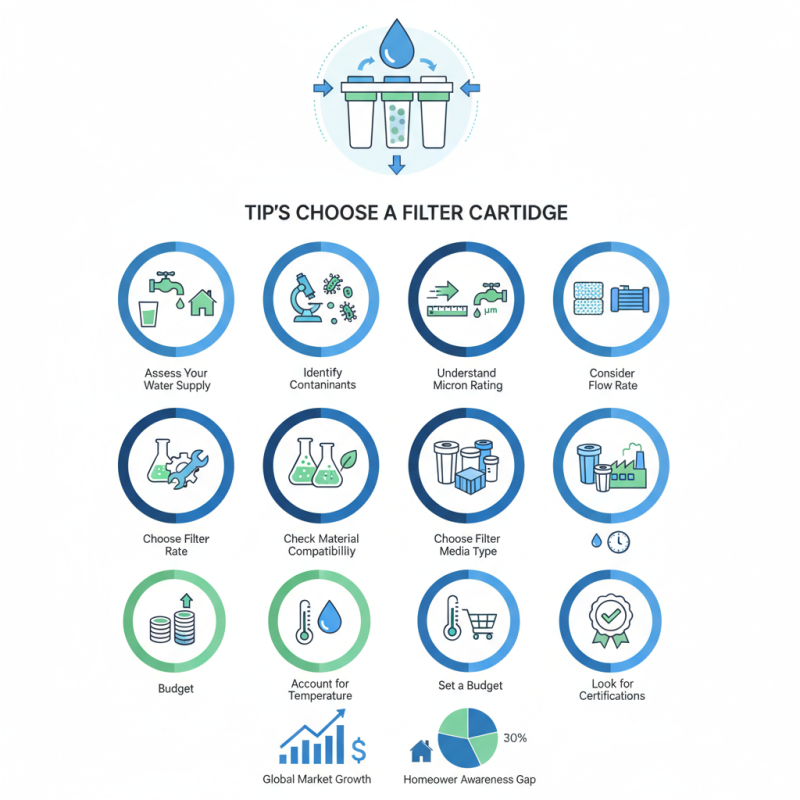
Choosing the right Filter cartridge is crucial for maintaining water quality and safety. According to recent industry reports, improper filtration can lead to contamination, affecting both health and taste. The global filter cartridge market is projected to reach $9 billion by 2027, highlighting its importance in various applications.

When selecting a filter cartridge, consider specific needs. Different applications require different filter media. A report from the Water Quality Association indicates that 70% of homeowners are unaware of the specific filtration requirements for their water supply. This gap in knowledge can lead to costly mistakes and potential health risks.

Understanding the intricacies of filter cartridges is essential. Factors like flow rate, micron rating, and material compatibility significantly influence performance. Many users overlook these details, leading to inefficient filtration. A thoughtful approach to selection can enhance water quality and extend equipment life. It's critical to assess both your environment and the contaminants present in your water supply.
Top 10 Tips for Choosing the Right Filter Cartridge for Your Needs?

Understanding Different Types of Filter Cartridges Available in the Market

When selecting the right filter cartridge, understanding different types can greatly impact performance. There are several core categories available in the market. These include activated carbon, sediment, and reverse osmosis cartridges. Each type serves a unique purpose and can influence water quality significantly. According to a recent industry report, activated carbon cartridges remove harmful chemicals and improve taste, while sediment cartridges are essential for filtering out particulate matter.

Consider your specific needs. If you are dealing with turbidity, a sediment filter is vital. For tackling odors and chemical contaminants, opt for activated carbon. The Water Quality Association states that an effective filtering system may reduce contaminants by up to 95%. This number reflects how critical filter selection is for safety and taste.

Some tips for making your choice include evaluating your water source and usage patterns. Test your water to identify contaminants. This will guide your cartridge choice. It's also beneficial to check the replacement frequency. A filter that lasts longer often saves both time and money. However, keep in mind that higher lifespan pads may have trade-offs in efficiency or initial cost. Balancing these factors is key to achieving optimal performance.

Evaluating Your Water Quality and Specific Filtration Needs

Evaluating your water quality is crucial before selecting a filter cartridge. Knowing what contaminants are present helps you choose effectively. According to the Environmental Protection Agency (EPA), over 10 million Americans use water systems that violate health standards. Understanding your specific filtration needs can prevent health risks.

Tip 1: Test your water. Home testing kits reveal key contaminants. Heavy metals and microbiological substances can be harmful. Knowing the types of pollutants in your water assists in making informed decisions.

Another important aspect is the filter's efficiency. Not all cartridges eliminate the same contaminants. Research conducted by the Water Quality Association indicates that filters vary greatly in performance. Some are better at removing chlorine, while others tackle lead effectively.

Tip 2: Match the filter cartridge to your needs. Consider your local water supply, your health factors, and the specific filtration goals that you have set.

Lastly, consider maintenance. Filters require regular replacements to ensure optimal performance. Neglecting this can lead to decreased effectiveness. Filters that are not replaced may allow contaminants back into your water supply.

Tip 3: Schedule replacements. Set reminders to check your cartridges. This simple action can enhance your water quality significantly. Make educated choices for a healthier lifestyle.

Recognizing Key Features That Impact Filter Cartridge Performance

Choosing the right filter cartridge involves understanding key performance features. One important aspect is the micron rating. This measures the size of particles the filter can remove. For example, a 5-micron filter captures larger contaminants like rust and dirt. However, a 1-micron filter is necessary for finer pollutants, including bacteria.

Another feature to consider is flow rate. It determines how quickly water passes through the filter. High flow rates provide better convenience but might compromise filtration quality. Balance is crucial; a filter that flows too fast may not remove all impurities effectively. Additionally, specific filters are designed for certain applications, like drinking water or industrial use. This specialization impacts the overall effectiveness of the filtration process.

Material construction is also a critical factor. Some cartridges use pleated media, while others are made from wound string. Each material offers different benefits and drawbacks. For instance, pleated filters often have a larger surface area, increasing dirt-holding capacity. However, they may require more frequent replacement. Evaluating these aspects enhances your choice, leading to better overall performance.

Top 10 Tips for Choosing the Right Filter Cartridge for Your Needs

Feature Description Impact on Performance
Material Type Common materials include polypropylene, polyester, and cellulose. Affects durability, chemical resistance, and filtration efficiency.
Micron Rating Indicates the size of particles that can be filtered. Lower micron ratings remove smaller particles, enhancing water clarity.
Flow Rate Measurement of the volume of liquid that can pass through per minute. Impacts the efficiency of the filtration system; a higher flow rate is ideal for larger systems.
Compatibility Ensures the cartridge fits the filtration system. Ensures proper sealing and efficiency during operation.
Chemical Filter Type Activated carbon, ion exchange, or specialty media. Determines which contaminants can be removed from the water.
Filter Life Duration a filter can last before needing replacement. Impacts maintenance frequency and cost-effectiveness.
Bare and Pleated Design Flat sheets or folded designs enhance surface area. Affects the capacity to hold dirt and overall filtering efficiency.
Cost Price of the cartridge. Should reflect quality and performance, balancing budget and needs.
Environmental Considerations Recyclability and lifecycle of the filter. Impacts sustainability and waste management practices.
Brand Reputation Vendor's reputation in the market. Trust in the product quality and effectiveness.

Assessing Compatibility with Your Existing Filtration System

When choosing a filter cartridge, compatibility is crucial. The filter must fit your existing filtration system. This can seem straightforward, but many users overlook specific details. For instance, verify the dimensions and connection types. An ill-fitting cartridge can lead to leaks or ineffective filtration.

Assess the filtration process your system uses. Different systems may require unique cartridge types. Consider your water source too. Is it municipal or well water? Identifying impurities in your water helps narrow your options. Compatibility goes beyond size; it includes filtration capabilities and material composition.

Incompatible cartridges can cause frustrations. Users might find themselves constantly replacing filters or dealing with poor performance. Research how long your current filters last. The lifespan can be an indicator of compatibility. Learn from others’ experiences. Some may have faced challenges that can inform your choice. Take your time and evaluate your options thoroughly.

Choosing Filters Based on Lifespan and Maintenance Requirements

Choosing the right filter cartridge involves understanding lifespan and maintenance requirements. This can be complex. It's essential to consider how often you want to change your filter. Some have a lifespan of a few months, while others last years. A shorter lifespan may mean you need to monitor your filters more closely. Regular replacement can ensure great performance, but it also requires action on your part.

Maintenance is another critical factor. Some filters are easier to clean than others. A filter that requires frequent cleaning can be cumbersome. Make sure to check the cleaning instructions. If you find them tedious, you might consider a cartridge that offers a more straightforward maintenance process. This can save time and effort in the long run.

Understanding your needs is vital. If you have a busy lifestyle, you might prefer a filter that requires less maintenance. However, if you're diligent about upkeep, you can choose a more demanding option to optimize performance. Balancing these factors is key. It’s not just about what works best; it’s about what works for you.

Back to top
