
GST : 27AAFFV7667M1ZA

call images

Call us

08045801431

7 Tips for Choosing the Right PVC Mixer

Selecting the right Pvc Mixer is a production decision, not merely an equipment purchase. PVC compounds respond sharply to heat, shear, residence time, and moisture. A mixer that looks powerful on paper may still produce inconsistent fusion, dead zones, or overheated powder.

Industry data shows why this decision matters. PlasticsEurope’s Plastics—The Fast Facts 2024 reports approximately 54.6 million tonnes of plastics production in Europe during 2023. PVC remains important in pipes, profiles, cables, flooring, and medical products. Grand View Research also identifies construction as a major driver of global PVC demand. These markets require repeatable batches, clean surfaces, and dependable throughput.

The following seven tips focus on practical selection criteria for a Pvc Mixer. They examine batch size, rotor design, heating and cooling performance, torque, automation, cleaning access, and after-sales support. A suitable machine should handle your actual formulation, not an idealized brochure sample. Ask suppliers for trials using your resin, stabilizer, plasticizer, and filler. Watch the powder movement through the vessel. Check whether the discharge temperature remains stable.

Capacity alone can mislead. A larger chamber may increase output while reducing mixing efficiency. That shortcut can look efficient, but it often is not. Operators should also review energy consumption, maintenance records, spare-part availability, and guarding requirements. ISO 12100 principles support risk reduction through safer machine design, though compliance still requires site-specific assessment. Reliable choices come from measured trials, documented specifications, and honest attention to process weaknesses.
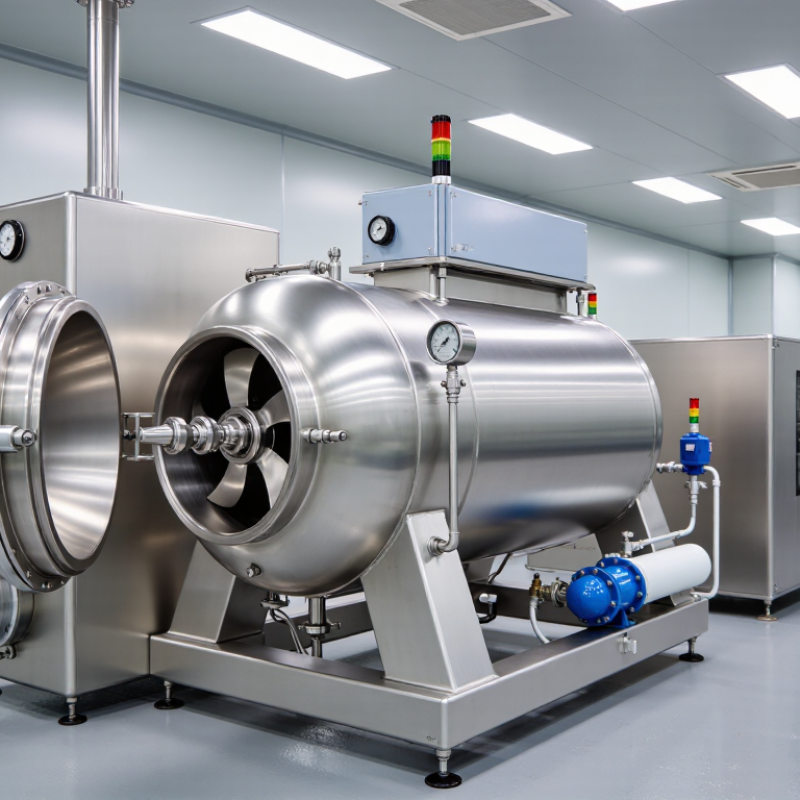
7 Tips for Choosing the Right PVC Mixer

Define the PVC Mixing Requirements and Production Goals

7 Tips for Choosing the Right PVC Mixer

Define the PVC Mixing Requirements and Production Goals

Start with the product, not the mixer. Record the PVC grade, stabilizer package, plasticizer level, filler loading, batch size, and target output. PlasticsEurope reported 400.3 million tonnes of global plastics production in 2022. This scale shows why small process losses can become expensive quickly.

Your production goal should include more than kilograms per hour. Set acceptable limits for dispersion, temperature rise, fusion time, dust control, and batch consistency. A rigid profile compound may need controlled heating and strong shear. A flexible formulation may require gentler blending. Measure torque and material temperature during trials. Watch the powder near the vessel wall. That area often reveals poor circulation first.

Ask the supplier for test data using your formulation. Check whether the mixer can handle your largest filler load without unstable torque. Review the discharge temperature, cleaning time, and energy use per batch. ISO and ASTM test methods can support laboratory comparisons, but they cannot replace production trials. The European Chemicals Agency emphasizes exposure control for industrial powders, so dust capture should be part of the equipment specification.

Do not choose capacity from the brochure alone. Leave practical headspace for expansion and safe mixing. I have seen oversized vessels produce uneven blends at low fill levels. That mistake is easy to miss. A short pilot run, repeated with several batches, can expose it before installation.

Cite: PlasticsEurope, Plastics—The Fast Facts 2023; European Chemicals Agency, workplace exposure guidance.

Select the Mixer Type for Your PVC Formulation

Selecting a PVC mixer starts with the formulation, not the motor size. Rigid PVC dry blends usually need a high-speed hot mixer, followed by a separate cooling mixer. Heat activates additives and improves dispersion, but excessive heat can begin unwanted fusion. Flexible compounds may need gentler mixing to protect plasticizer balance. For paste PVC, a planetary or high-shear mixer often handles viscosity better than a dry-blend unit. Measure torque during trials. It reveals resistance changes before quality visibly declines.

Match the mixer to batch volume and production rhythm. A ribbon mixer can suit moderate, uniform dry blending, while a high-intensity unit works faster with fillers and stabilizers. Do not judge capacity by the vessel’s full volume. Leave practical headspace for circulation and dust control. Check blade clearance, discharge design, cleaning access, and temperature sensors. Small dead zones can hold old material and alter the next batch. I have seen acceptable samples fail after storage because mixing was judged only immediately.

Request trials using your actual resin, filler, pigments, and additive package. Compare dispersion, bulk density, color consistency, fusion time, and power consumption. Test normal and difficult batches. A mixer that performs beautifully at half load may struggle near its limit. Consider automation, cooling-water response, and operator safety before purchase. Keep records. They expose assumptions. One practical mistake is choosing the fastest machine, then discovering its shear damages heat-sensitive additives. The right type should fit the formulation’s thermal window, viscosity, and daily cleaning reality.

Evaluate Capacity, Speed, and Temperature Control

Choosing the right PVC mixer starts with its usable capacity, not the number printed on the equipment label. A mixer filled too heavily may leave dry pockets near the vessel wall. One filled too lightly can waste energy and produce uneven blending. Measure your normal batch size, powder bulk density, additives, and expected expansion before comparing models. Small batches expose weaknesses. Leave enough headspace for circulation, but avoid excessive empty volume.

Speed control deserves equal attention. A low starting speed can reduce dust and prevent material from collecting around the blades. Higher speed may improve dispersion, but it also increases friction and heat. Review the motor’s torque at different speeds, rather than trusting maximum revolutions alone. Watch temperature rise. PVC can become unstable when processing heat exceeds the formulation’s safe range. Use a jacket, cooling loop, or controlled air system when necessary. Place temperature sensors where the material actually moves, not only near the vessel wall.

During trials, record batch weight, mixing time, speed, and temperature every few minutes. Compare samples from the top, center, and bottom. This practical check often reveals problems that a smooth-looking batch hides. Sensor calibration also matters. A small reading error can change the process decision. I would repeat trials with seasonal material changes, because humidity and powder flow can shift performance. The most efficient setting is not always the fastest one.

7 Tips for Choosing the Right PVC Mixer - Evaluate Capacity, Speed, and Temperature Control
Tip Evaluation Factor Practical Guideline Why It Matters What to Verify Before Purchase
1 Match the Working Capacity Size the mixer according to the intended batch weight and bulk density. A practical starting point is to operate within approximately 50%–80% of the vessel's nominal volume, subject to the mixer design and material behavior. An underfilled mixer may provide weak blending, while overfilling can reduce circulation, increase mixing time, and overload the drive system. Request the usable working volume, maximum batch weight, minimum recommended fill level, and test results using the actual PVC formulation.
2 Select the Appropriate Mixing Speed Low-speed ribbon or paddle mixers commonly operate around 20–60 rpm. High-intensity mixers often use substantially higher rotor speeds, frequently about 500–1,500 rpm, depending on the formulation and equipment design. Speed affects dispersion, blending time, heat generation, and the risk of excessive shear or material degradation. Confirm the adjustable speed range, speed-control accuracy, start-up torque, and whether separate low- and high-speed stages are available.
3 Evaluate Temperature Control For many PVC dry-blend processes, hot mixing may discharge in approximately the 110–130°C range, followed by cooling to roughly 40–55°C before storage or downstream processing. Actual setpoints depend on the formulation. Controlled heating helps distribute additives, while controlled cooling reduces caking, premature fusion, and thermal damage. Look for jacket or internal cooling capability, temperature sensors near the material zone, automatic setpoint control, and documented heating and cooling curves.
4 Check Mixing Uniformity Ask for a validation protocol based on multiple samples taken from different locations and times. The acceptable variation should be defined for the specific additive or formulation being mixed. Uniform distribution of stabilizers, lubricants, pigments, and fillers is essential for consistent processing and finished-product quality. Review sample locations, test methods, mixing time, batch-to-batch repeatability, and evidence from a trial using production-grade materials.
5 Assess Torque and Drive Capacity The drive should be selected for the highest expected bulk density, starting load, moisture condition, and viscosity-related resistance, with an appropriate engineering safety margin. Adequate torque prevents stalling and supports reliable operation during charging, cold starts, and heavy or compacted batches. Compare motor power, gearbox rating, peak torque, overload protection, start-up behavior, and maintenance requirements under the intended load.
6 Consider Material Contact and Cleaning Product-contact surfaces are commonly specified in corrosion-resistant stainless steel or another compatible material, with smooth welds and minimal dead zones. A cleanable mixer reduces cross-contamination, material retention, additive buildup, and unplanned cleaning time between formulations. Inspect surface finish, blade clearance, discharge design, access doors, seals, clean-out procedures, and compatibility with the formulation's additives.
7 Verify Safety and Process Monitoring The system should include guarded moving parts, an interlocked access cover, emergency stopping, overload protection, temperature alarms, and clear operating controls. PVC powders and additives can create dust and mechanical hazards. Monitoring also helps prevent operation outside validated temperature, speed, and load limits. Confirm compliance with applicable local machinery and electrical requirements, dust-control provisions, alarm history, operator training, and preventive-maintenance access.
Note: The operating ranges shown are general engineering reference points for preliminary equipment screening. Final capacity, speed, temperature, and safety settings should be confirmed through formulation-specific trials and the mixer manufacturer's technical documentation.

Check Material Compatibility, Safety, and Maintenance Needs

Tip 1: Check material compatibility before comparing mixer capacity. PVC resin, plasticizers, stabilizers, and fillers behave differently during blending. A mixer that handles dry resin may struggle with sticky additives. Review temperature limits, moisture sensitivity, and chemical resistance for every contact surface. Small lab trials reveal problems early.

Tip 2: Match the mixer to your production routine.

Tip 3: Inspect the safety design. Look for guarded drives, lid interlocks, emergency stops, and clear access controls. Operators should not reach into the chamber during movement. Keep dust extraction effective, especially when fine powders become airborne.

Tip 4: Measure heat carefully. Excessive friction can discolor PVC or damage heat-sensitive additives. Use a calibrated sensor, but do not trust readings blindly. Material near the wall may be hotter.

Tip 5: Choose simple cleaning access. Residue often collects beneath blades, seals, and discharge gates.

Tip 6: Plan maintenance before installation. Check lubrication points, replaceable seals, fasteners, and inspection windows. Keep a written log of noise, vibration, temperature, and cleaning time.

Tip 7: Ask for practical service evidence, not only performance claims. Test a normal batch and a difficult batch. I once underestimated cleanup time because the chamber looked accessible. It was not. That mistake changed the purchase checklist. A reliable mixer should support safe operation, repeatable blending, and realistic maintenance work.

Compare Suppliers, Total Cost, and Long-Term Performance

Choosing a PVC mixer should begin with the material, not the sales brochure.

Tip one: define batch size, powder behavior, moisture range, and target temperature. A 500-liter unit may look efficient, but oversized chambers can waste energy and reduce mixing consistency.

Tip two: compare suppliers through factory visits, reference calls, and sample trials. Ask for test records, weld details, control-system documentation, and spare-parts lead times. A polished website proves little.

Tip three: calculate total cost over five years. Include purchase price, freight, installation, electricity, labor, cleaning time, blades, seals, and unplanned downtime. Cheap is not cheap.

Tip four: inspect the mixer’s contact materials and shaft sealing. PVC dust enters small gaps and can turn routine maintenance into a weekly interruption.

Tip five: measure performance with your own formulation. Check discharge temperature, batch uniformity, cycle time, and residue after cleaning. I once trusted a short demonstration and missed a temperature drift during longer runs. That was my mistake.

Tip six: review safety controls and operator access, including guarding, emergency stops, and lockout procedures. Reliable equipment should support safe, repeatable work.

Tip seven: judge long-term support, not only the first quotation. Confirm technician response times, training, upgrade options, and written warranty terms. Ask what happens when a sensor fails on a weekend. The answer reveals more than a discount. Leave room for doubt. Supplier promises can change, while documented tests and service commitments are easier to verify.

Back to top
