
China’s industrial motor sector has expanded from standard production to highly specialized motion solutions. This guide introduces China’s top 10 Industrial Bldc Motor manufacturers and the capabilities that distinguish them. These companies serve automation, robotics, conveyors, pumps, medical equipment, and energy systems.
A reliable manufacturer should show more than an attractive catalog. Look for tested torque curves, documented efficiency data, stable winding quality, and clear thermal limits. Factory experience becomes visible in small details. Cable exits should feel secure. Bearings should rotate smoothly. Housing tolerances should remain consistent across samples. Noise levels also matter when motors operate beside workers or precision sensors.
This overview considers engineering depth, production capacity, customization, quality control, and after-sales support. It also examines whether suppliers can provide prototypes, feedback, firmware cooperation, and repeatable batch performance. Certifications help, but they do not replace independent verification. A supplier may present impressive test numbers. Actual results can change with load, temperature, controller settings, and installation.
The ranking is useful, but not absolute. Application fit should guide the final decision. A compact motor may suit a packaging line, while a larger unit may handle continuous conveyor duty. Details matter. Buyers should request samples, inspect test reports, and compare lifetime expectations before signing a purchase agreement. This article aims to offer a practical starting point, not a perfect verdict. Some manufacturers may improve quickly, while others may fall behind. Careful evaluation remains essential.
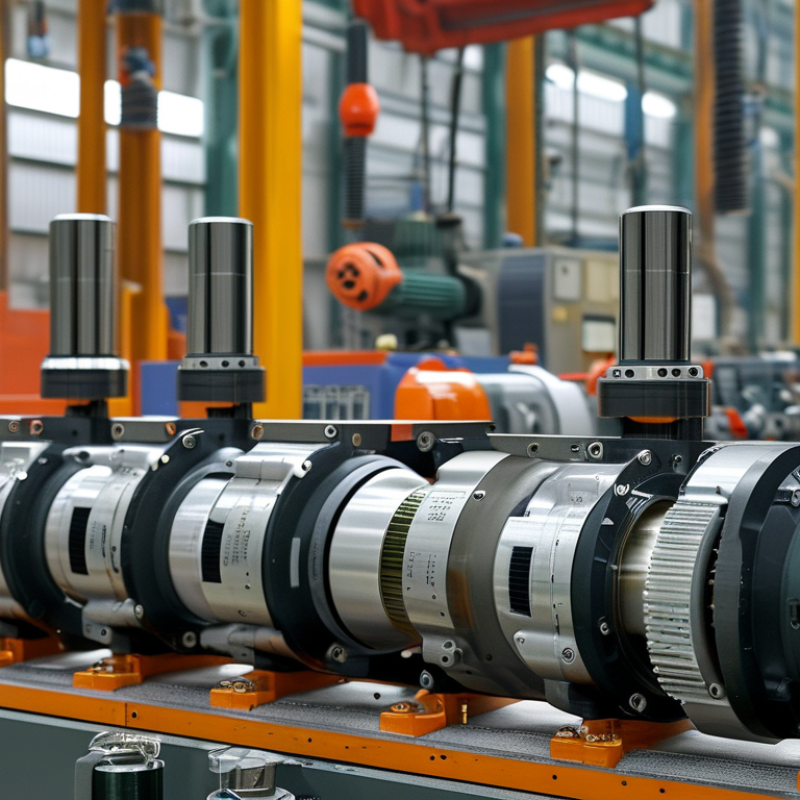
China’s industrial BLDC motor industry is expanding with factory automation, robotics, medical equipment, and energy-saving machinery. China remains a major manufacturing base for motor components, controllers, magnets, and precision assemblies. Demand is shifting from basic speed control toward quieter operation, higher efficiency, and integrated feedback systems.
The International Energy Agency estimates that electric motor systems consume about 53% of global electricity. This makes efficiency a practical purchasing issue, not just an engineering preference. Grand View Research valued the global brushless DC motor market at approximately USD 20 billion in 2023 and projects strong growth through 2030. China’s role is significant, although public estimates differ because some reports include automotive and consumer motors.
Industrial buyers usually assess torque stability, thermal performance, bearing life, ingress protection, and controller compatibility. A motor running beside a stamping line must resist dust, vibration, and repeated acceleration. Custom winding and compact housings are common competitive advantages among Chinese manufacturers. However, supplier comparisons can be imperfect. Catalog ratings may reflect ideal laboratory conditions rather than continuous factory loads. Buyers should request duty-cycle curves, efficiency maps, test methods, and traceable quality records. That evidence matters. Research from the China Electrotechnical Society also highlights efficiency upgrades and intelligent manufacturing as continuing industry priorities, but implementation quality varies across suppliers.

Evaluating China’s leading industrial BLDC motor manufacturers requires evidence beyond factory size. The IEA reports that electric motor systems consume nearly half of global electricity. Efficiency claims therefore deserve careful verification. Ask for evidence. Review test reports based on IEC 60034 standards, not marketing descriptions. Check rated efficiency, torque stability, thermal rise, vibration, and acoustic performance under continuous load. A motor that performs well for ten minutes may fail after eight hours.
The U.S. Department of Energy notes that motor systems can represent more than 70% of industrial electricity use. This makes controller quality, sensor feedback, and maintenance support commercially important. Request sample units, winding diagrams, insulation-class data, and life-test records. Examine production traceability, incoming-material controls, and final inspection rates. Independent laboratory results add credibility, especially for high-volume projects. Do not judge only by price. A cheaper quotation may exclude endurance testing, customized firmware, or spare bearings. Supply-chain resilience also matters. Compare lead times, replacement policies, export documentation, and engineering response speed. I would still treat one successful sample as incomplete evidence. Field performance can change with ambient heat, dust, load cycling, and installation errors. That is where supplier claims need stronger testing.
China’s Top 10 Industrial BLDC Motor Manufacturers are often judged by more than production volume. Industrial buyers should examine torque stability, thermal performance, noise control, and service response. These factors directly affect conveyors, pumps, robotic joints, and automated assembly equipment.
A reliable manufacturer should provide test data for efficiency, insulation strength, vibration, and operating temperature. Factory audits can reveal winding quality, magnet handling, balancing processes, and final inspection practices. Ask for samples under real loads. A motor that performs well in a brochure may behave differently after eight hours of continuous operation. This is where practical engineering experience matters. Rankings can change by application, and no single list fits every factory.
Tips: Compare rated torque, peak torque, speed range, encoder options, and protection levels. Request a clear lifespan estimate and maintenance schedule. Check whether engineers can adjust winding designs for your voltage and duty cycle. Keep written records of test conditions. Small details matter. One overlooked connector can stop an entire production line. It is also wise to review delivery history, spare-part availability, and technical support before signing a long-term contract. Some manufacturers communicate quickly during sales, but support may become slower after installation. That gap deserves careful attention.
| Rank | Manufacturer Code | Primary Product Segment | Typical Continuous Power | Nominal Voltage | Typical Speed Range | Feedback Options | Ingress Protection | Efficiency Class | Typical Industrial Applications |
|---|---|---|---|---|---|---|---|---|---|
| 1 | Manufacturer 01 | Servo-grade BLDC motors | 400 W–5 kW | 24–480 VDC | 1,500–6,000 rpm | Hall sensors, encoders | IP54–IP65 | Up to IE4-equivalent performance | Robotics, CNC equipment, automated machinery |
| 2 | Manufacturer 02 | Integrated BLDC motor systems | 100 W–3 kW | 24–310 VDC | 500–4,000 rpm | Hall sensors, sensorless control | IP44–IP65 | High-efficiency industrial design | Conveyors, pumps, fans, packaging lines |
| 3 | Manufacturer 03 | Low-voltage industrial BLDC motors | 50 W–1.5 kW | 12–96 VDC | 800–5,000 rpm | Hall sensors, optical encoders | IP40–IP65 | High-efficiency permanent-magnet design | AGVs, warehouse systems, actuators |
| 4 | Manufacturer 04 | High-torque BLDC motors | 750 W–8 kW | 48–560 VDC | 300–3,000 rpm | Hall sensors, resolvers, encoders | IP54–IP67 | IE3–IE4-equivalent performance | Material handling, lifting equipment, extruders |
| 5 | Manufacturer 05 | Compact BLDC motor assemblies | 20 W–800 W | 12–72 VDC | 1,000–8,000 rpm | Hall sensors, sensorless control | IP40–IP65 | Energy-efficient compact design | Instrumentation, valves, small pumps, laboratory systems |
| 6 | Manufacturer 06 | Cooling and ventilation BLDC motors | 30 W–2.2 kW | 24–400 VDC | 700–3,600 rpm | Sensorless, Hall sensors | IP44–IP68 | High-efficiency EC motor design | HVAC, air handlers, refrigeration, cleanrooms |
| 7 | Manufacturer 07 | Waterproof BLDC motors | 100 W–4 kW | 24–144 VDC | 500–4,500 rpm | Hall sensors, encoders | IP65–IP68 | High-efficiency sealed construction | Outdoor automation, marine equipment, mobile machinery |
| 8 | Manufacturer 08 | Precision motion BLDC motors | 100 W–2 kW | 24–320 VDC | 1,000–6,000 rpm | Incremental and absolute encoders | IP54–IP65 | High-efficiency servo-oriented design | Printing, textile machinery, semiconductor equipment |
| 9 | Manufacturer 09 | Gear-integrated BLDC motors | 40 W–1.5 kW | 12–220 VDC | 10–1,500 rpm output | Hall sensors, encoders | IP44–IP65 | Energy-efficient geared drive systems | Conveyors, dispensers, medical automation, doors |
| 10 | Manufacturer 10 | Customized industrial BLDC motors | 10 W–10 kW | 12–600 VDC | 100–8,000 rpm | Hall sensors, encoders, resolvers | IP44–IP67 | Application-specific high efficiency | Special-purpose machinery, pumps, robotics, automation retrofits |
China’s top industrial BLDC motor manufacturers increasingly compete through engineering depth, not price alone. Their products often combine sensorless or Hall-based commutation, rare-earth magnets, sealed bearings, and compact aluminum housings. These choices support stable torque in conveyors, pumps, fans, robotics, and automated production lines.
Performance depends on more than rated power. Engineers examine continuous torque, peak torque, speed range, thermal rise, vibration, acoustic noise, and efficiency under real loads. A motor reaching 90% efficiency in a laboratory may perform differently beside a hot machine cabinet. Testing should include repeated starts, low-speed operation, voltage variation, and blocked-rotor protection. Small details matter.
Customization is where supplier capability becomes visible. Manufacturers may adjust shaft dimensions, winding resistance, connector placement, encoder feedback, mounting holes, and control firmware. Some can develop samples quickly, but fast sampling is not the same as reliable mass production. I would request test curves, insulation data, balancing records, and life-cycle evidence before approval. Communication can still be uneven, especially when technical terms are translated loosely. Clear drawings help. So does a physical prototype.
A practical supplier should explain its tolerances, testing equipment, and failure-analysis process. It should also admit design limits. That honesty is useful.
Industrial BLDC motors support conveyors, pumps, robotics, medical equipment, and automated production lines. Their precise speed control reduces heat and improves operating efficiency. However, performance depends on more than rated power. Engineers should compare torque curves, duty cycles, cooling methods, noise levels, and feedback options. A motor designed for a clean factory may fail in dusty or humid conditions.
Tips: Request thermal-rise, vibration, insulation, and endurance test reports. Check whether testing follows relevant IEC standards and whether the factory maintains ISO 9001-based quality procedures. Ask for sample units before approving large orders. Small details matter, such as connector sealing, shaft tolerance, and encoder stability.
Supplier selection should include traceability, production capacity, inspection records, and technical support. Reliable manufacturers explain material choices and provide clear drawings, test data, and maintenance guidance. Field experience also shows a weakness: polished datasheets can hide unstable quality between batches. Therefore, review several samples and monitor repeat production. Confirm protection ratings, operating temperature, warranty terms, and response times before signing a supply agreement. The cheapest offer may create higher downtime costs. Yet, even experienced buyers can overlook installation conditions. A careful supplier will ask practical questions before recommending a motor.
For an immediate response, please call this
number08045801431
Price:
