
GST : 27AAFFV7667M1ZA

Call us
08045801431
Call us
08045801431

Forged Structural Parts support vehicles, bridges, turbines, rail systems, and heavy machinery. Their shapes may look simple. Their responsibilities are not.
The World Steel Association reported 1,888.2 million tonnes of crude steel production in 2023. That figure shows the scale of the material ecosystem behind global manufacturing. However, steel volume alone cannot prove part quality. The U.S. Department of Energy’s Bandwidth Study on Energy Use and Opportunities in U.S. Metalcasting and Forging Industries highlights energy, process control, and efficiency as continuing industrial concerns. Buyers must therefore examine grain flow, heat treatment, dimensional control, traceability, and fatigue performance.
William F. Hosford, author of Metal Forming: Mechanics and Metallurgy, described forging simply: “Forging is the working of metal by plastic deformation.” That principle explains why forged components often withstand repeated loads better than poorly designed alternatives. It does not make every forged part reliable. That assumption is too simple.
This guide reviews ten important types of Forged Structural Parts for global buyers. It covers automotive steering knuckles, axle beams, suspension arms, flanges, crane hooks, railway components, wind-turbine shafts, aerospace fittings, and construction-machine links. Each category demands different tests and documentation. A low quotation can conceal weak inspection practices, unstable tooling, or inconsistent heat treatment. Buyers should compare certificates, supplier experience, testing capacity, and production evidence before choosing a factory. The best decision is rarely the cheapest one.
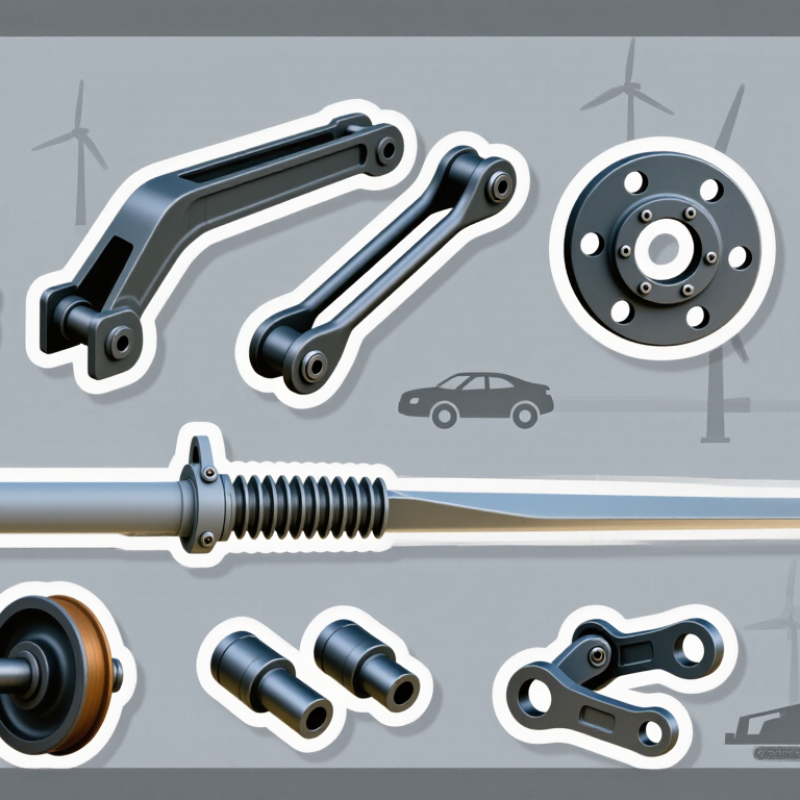
Top 10 Types of Forged Structural Parts for Global Buyers
What Forged Structural Parts Are and Why They Matter
Forged structural parts are load-bearing components shaped under controlled pressure and heat. They include shafts, flanges, connecting rods, brackets, rings, hubs, and heavy-duty pins. Unlike cast parts, forging can align metal grain flow with expected loads. This often improves toughness, fatigue resistance, and dimensional reliability. A forged part is not automatically superior. Design, material grade, heat treatment, and inspection still decide performance.
The scale of demand is significant. The World Steel Association reported approximately 1.89 billion tonnes of crude steel production in 2023. The International Energy Agency’s Renewables 2024 report expects global renewable capacity to expand by nearly 5,500 gigawatts by 2030. That growth requires durable drivetrain shafts, turbine hubs, tower flanges, and foundation connectors. Small defects spread. A surface crack near a sharp corner can become a serious failure point under repeated loading.
Experienced buyers should review forging method, ultrasonic testing, tensile results, impact values, and traceability records. ISO 9001 systems help control processes, but certificates alone cannot prove part quality. Ask for heat numbers, inspection standards, and samples from actual production. Supplier drawings may also hide unclear tolerances. This is where careful engineering review matters. Cost remains important, yet premature failure can create longer downtime, replacement delays, and difficult field repairs. The practical lesson is less dramatic: reliable forging begins with specific loads, realistic tolerances, and evidence that each batch meets them.
Forged structural parts are load-bearing components shaped under compressive force. Their refined grain flow, dimensional reliability, and resistance to impact and fatigue make them important in energy, transportation, construction, and heavy industrial equipment.
The chart compares representative specified or typical yield-strength values for commonly used forged steel grades. Actual performance depends on the applicable standard, section size, heat treatment, testing direction, and final part design. Values are shown in MPa.
Representative references include ASTM A105, ASTM A350 LF2, ASTM A182 F11, ASTM A694 F52, ASTM A668, EN 10083, EN 10084, and commonly specified quenched-and-tempered alloy steels.
Forging methods directly shape the strength and reliability of structural parts. Common examples include shafts, gears, rings, flanges, hubs, axles, connecting rods, crankshafts, pressure-body parts, and fasteners.
Open-die forging suits large shafts and heavy flanges, where controlled deformation improves internal soundness. Closed-die forging creates accurate connecting rods, gears, and hubs with continuous grain flow. Ring rolling produces strong, circumferential structures for rings and bearing races. Upset forging strengthens bolts and other parts by concentrating material along the load path.
Material choice matters, but process control often decides long-term performance. Correct heating reduces cracking and unwanted grain growth. Controlled cooling helps limit residual stress. Heat treatment can improve hardness, toughness, and dimensional stability. Inspection should include ultrasonic testing, magnetic particle testing, and dimensional checks when risk levels justify them. A clean surface is not proof of internal quality. That assumption causes trouble.
Tips: Ask for grain-flow direction, forging reduction, heat-treatment records, and test standards before approval. Compare the drawing with the actual load path. Small radii can create stress concentrations. Experienced buyers should also review machining allowances, because excessive removal may cut into the strongest forged region. Forging is powerful, not flawless.
The Ten Main Types of Forged Structural Parts
Forged structural parts carry loads where casting or fabrication may become unreliable. The ten main types include beams, columns, brackets, base plates, flanges, hubs, shafts, clevises, lifting lugs, and forged rings. Each type serves a different mechanical purpose.
Beams and columns support frames, platforms, and heavy machinery. Brackets connect members while controlling movement and vibration. Base plates spread loads across foundations. Flanges create strong bolted joints around pipes, housings, and pressure-bearing assemblies. Hubs transfer torque between shafts, wheels, and rotating equipment. Shafts require accurate diameters, balanced geometry, and controlled heat treatment. Clevises use pins to form adjustable joints. Lifting lugs need carefully checked hole edges and load directions. Forged rings support rotating systems, bearing seats, and large circular structures.
Details matter greatly.
During production reviews, experienced buyers check material certificates, forging ratios, heat-treatment records, ultrasonic testing, and dimensional reports. Traceability should follow each part from billet to final inspection. A small radius mistake can create stress concentration near a bracket or lug. Surface scale may also hide defects before machining. Buyers often specify grain flow, impact performance, hardness ranges, and machining allowances. However, a perfect drawing does not guarantee a perfect part. I have seen projects lose time because inspection points were defined too late. Clear tolerances and realistic delivery schedules reduce that risk. Forged structural components still need practical design review, especially around weld interfaces, bolt holes, and changing section thicknesses.
| No. | Forged Structural Part | Typical Applications | Common Material Groups | Typical Manufacturing Route | Key Performance Requirements | Common International Standards | Typical Inspection Focus |
|---|---|---|---|---|---|---|---|
| 1 | Forged Flanges | Pipelines Pressure vessels Valves Process equipment | Carbon steel, low-alloy steel, stainless steel, nickel-based alloys, and duplex stainless steel. | Billet heating, open-die or closed-die forging, heat treatment, machining of faces and bolt holes, followed by surface finishing. | Pressure tightness, dimensional accuracy, fatigue resistance, corrosion resistance, and correct grain flow around the hub. | ASME B16.5, ASME B16.47, EN 1092-1, ASTM A105, ASTM A182, and applicable pressure-equipment requirements. | Chemical composition, mechanical properties, flange dimensions, hardness, visual inspection, ultrasonic testing, and magnetic-particle or dye-penetrant testing where required. |
| 2 | Forged Shafts | Power transmission Turbomachinery Industrial drives Marine equipment | Medium-carbon steel, alloy steel, stainless steel, and precipitation-hardening stainless steel. | Free forging or rotary forging, normalizing or quenching and tempering, rough machining, straightening, and final machining. | High torsional strength, bending-fatigue resistance, concentricity, low residual stress, and reliable performance under cyclic loading. | ASTM A668, EN 10250, ISO 683, and customer-specific shaft or rotating-equipment specifications. | Ultrasonic testing for internal discontinuities, magnetic-particle testing, runout, straightness, hardness, tensile testing, and dynamic balance when applicable. |
| 3 | Forged Gears and Gear Blanks | Gearboxes Wind equipment Mining machinery Heavy drives | Carburizing alloy steels, nitriding steels, through-hardening alloy steels, and stainless steels for special environments. | Closed-die forging or ring rolling, normalizing, machining, carburizing or nitriding, tooth cutting, and final dimensional correction. | High tooth-root strength, contact-fatigue resistance, dimensional stability, wear resistance, and controlled case depth after heat treatment. | ISO 6336, ISO 1328, ASTM A291, EN 10084, and applicable gear-manufacturing specifications. | Grain flow, tooth geometry, case hardness, effective case depth, core hardness, surface finish, magnetic-particle testing, and metallographic examination. |
| 4 | Forged Rings | Bearings Flanges Pressure equipment Power generation | Carbon steel, low-alloy steel, stainless steel, nickel alloys, titanium alloys, and heat-resistant alloys. | Upsetting, piercing, ring rolling, heat treatment, rough machining, and final machining of inside and outside diameters. | Circumferential grain flow, dimensional stability, fracture toughness, fatigue resistance, and resistance to creep or corrosion where applicable. | ASTM A182, ASTM A288, EN 10250, EN 10222, and sector-specific pressure or bearing standards. | Ultrasonic testing, dimensional inspection, hardness mapping, grain-flow verification, surface inspection, and checks for laps or seams. |
| 5 | Forged Crankshafts | Diesel engines Gas engines Compressors Marine propulsion | Microalloyed steel, medium-carbon steel, alloy steel, and nodular iron alternatives where design requirements permit. | Closed-die or upset forging, controlled cooling, heat treatment, shot peening, rough machining, fillet rolling, and precision finishing. | High fatigue strength at fillets, torsional strength, journal wear resistance, dimensional accuracy, and resistance to bending distortion. | ISO 8528 for engine-generator applications, ISO 683, ASTM A668, and applicable marine or engine classification requirements. | Ultrasonic and magnetic-particle testing, crankshaft alignment, journal hardness, fillet radius, runout, balance, and fatigue-sensitive surface quality. |
| 6 | Forged Connecting Rods | Internal-combustion engines Compressors Reciprocating machinery | Medium-carbon steel, alloy steel, microalloyed steel, and titanium alloys for weight-sensitive applications. | Closed-die forging, controlled cooling or quenching and tempering, shot peening, machining of bores, and precision inspection. | High tensile and compressive fatigue strength, low weight, accurate center distance, dimensional stability, and reliable bearing-seat geometry. | ISO 683, ASTM A711 where applicable, and engine or reciprocating-equipment design specifications. | Dimensional inspection, hardness, magnetic-particle testing, ultrasonic inspection when specified, shot-peening coverage, and crack detection. |
| 7 | Forged Axles and Wheel Shafts | Rail vehicles Off-highway vehicles Industrial vehicles Heavy transport | Carbon steel, medium-carbon steel, alloy steel, and microalloyed steel. | Open-die or closed-die forging, controlled cooling, heat treatment, straightening, machining, and surface treatment where required. | High bending and rolling-contact fatigue resistance, toughness, straightness, dimensional repeatability, and resistance to crack initiation. | EN 13261 for railway wheelsets, ISO 1005 series, ASTM A668, and applicable vehicle or axle specifications. | Ultrasonic testing, magnetic-particle testing, hardness, straightness, concentricity, surface roughness, and verification of mechanical properties. |
| 8 | Forged Hooks and Lifting Components | Cranes Hoists Rigging systems Material handling | Alloy steel, carbon-manganese steel, and quenched-and-tempered high-strength steel. | Closed-die or open-die forging, heat treatment, machining, proof loading, and surface inspection without damaging sharp transitions. | High toughness, resistance to brittle fracture, controlled deformation, load-bearing capacity, and fatigue resistance. | EN 1677 series, ASME B30.10, ISO 7597, and applicable lifting-equipment regulations. | Material certification, hardness, proof-load testing, dimensional inspection, magnetic-particle or dye-penetrant testing, and traceability. |
| 9 | Forged Suspension and Steering Parts | Automotive chassis Construction vehicles Agricultural machinery Off-road systems | Microalloyed steel, medium-carbon steel, alloy steel, and aluminum alloys for selected lightweight designs. | Precision closed-die forging, controlled cooling, trimming, heat treatment where required, shot peening, and machining of interfaces. | High fatigue strength, impact toughness, low porosity, dimensional accuracy, corrosion protection, and stable performance under variable loads. | ISO 683, ISO 8643 where applicable, ASTM A711 for steel forgings where specified, and vehicle-component requirements. | Dimensional checks, hardness, magnetic-particle testing, microstructure, fatigue validation, surface quality, and verification of critical radii. |
| 10 | Forged Pressure-Bearing Bodies and Covers | Valves Pumps Pressure vessels Hydraulic equipment | Carbon steel, low-alloy steel, stainless steel, duplex stainless steel, and nickel-based alloys. | Open-die or closed-die forging, heat treatment, rough machining, pressure-boundary machining, and nondestructive examination. | Pressure integrity, fracture toughness, corrosion resistance, dimensional stability, leak prevention, and resistance to thermal cycling. | ASME Section VIII, ASME B16.34, ASTM A105, ASTM A182, EN 10222, and applicable pressure-equipment standards. | Chemical analysis, tensile and impact tests, ultrasonic testing, magnetic-particle or dye-penetrant testing, hydrostatic or pneumatic testing, and dimensional inspection. |
Note: Material selections, dimensions, heat-treatment conditions, inspection methods, and acceptance criteria should be confirmed against the final design, service conditions, purchase specification, and applicable edition of the referenced standard.
Materials and standards can change the buying decision more than part shape. Common products include beams, columns, brackets, flanges, rings, shafts, hubs, hooks, crane wheels, and pressure-bearing bodies. Carbon steel suits many general structures. Alloy steel offers higher strength and fatigue resistance. Stainless steel supports corrosive environments, while nickel alloys serve demanding heat conditions.
The World Steel Association reported approximately 1.89 billion tonnes of crude steel production in 2023. This scale does not mean every steel grade is interchangeable. North American projects often reference ASTM or ASME requirements. European buyers may require EN specifications and CE-related documentation. Japanese projects commonly use JIS standards. Chinese projects may request GB standards. ISO documents can support international alignment, but they may not replace project-specific rules. The Global Wind Report 2024 recorded 117 GW of new wind capacity in 2023, increasing demand for forged hubs, shafts, flanges, and bearing rings. Real procurement is less tidy. A matching grade may still fail because heat treatment, impact testing, or dimensional tolerances differ.
Tips: Confirm the governing standard before requesting quotations. Ask for heat numbers, material certificates, hardness results, and ultrasonic testing records. Check whether testing is required before or after machining. Small wording differences matter.
In practice, buyers should compare chemistry, tensile strength, yield strength, elongation, and impact temperature together. A supplier’s inspection plan should identify sampling frequency and acceptance limits. ISO 9001 certification supports process control, but it does not prove part fitness. That distinction is often missed.
(Sources: World Steel Association, World Steel in Figures 2024; Global Wind Energy Council, Global Wind Report 2024.)
Global buyers of forged structural parts need more than a part name. They must define load, environment, geometry, and service life. Common requirements cover shafts, rings, flanges, hubs, yokes, blocks, gears, hooks, and connecting rods. The World Steel Association’s 2024 World Steel in Figures reports nearly 1.89 billion tonnes of crude steel production in 2023. This scale creates options, but also increases material and traceability risks.
A strong purchase specification states the steel grade, forging ratio, grain direction, heat-treatment cycle, hardness range, and machining allowance. It should also define dimensional tolerances and surface requirements. Inspection plans commonly include chemical analysis, tensile testing, impact testing, hardness checks, ultrasonic testing, and magnetic-particle inspection. For critical sections, buyers should request heat numbers, furnace charts, calibration records, and material certificates. Small omissions become expensive later.
Supplier evaluation should combine capability evidence with production experience. Review die design control, forging capacity, NDT qualifications, subcontractor management, and corrective-action records. The IEA’s Iron and Steel Technology Roadmap estimates steelmaking creates about 7–9% of global energy-related carbon dioxide emissions. Energy data can therefore support responsible sourcing decisions. Yet carbon reporting alone does not prove part quality. A perfect checklist may still miss distortion after machining or unclear acceptance criteria. Buyers should approve a sample, inspect the first article, and compare results against the drawing before scaling production. Mistakes happen. The inspection plan must be practical enough to catch them.



For an immediate response, please call this
number08045801431

Price:
 Send Inquiry