
GST : 27AAFFV7667M1ZA

Call us
08045801431
Call us
08045801431

Choosing the right Hvac Oil Pump manufacturer requires more than comparing prices or browsing attractive product catalogs. Global buyers need dependable oil circulation, stable pressure control, accurate materials, and documented testing. A pump may look efficient on paper, yet fail under cold starts, high discharge temperatures, or continuous industrial operation. Small details matter.
Rajan Rajendran, a recognized refrigeration and compressor engineering specialist, has repeatedly stressed the importance of oil control. His practical warning is clear: “Oil management is critical to compressor reliability.” That principle guides this 2026 manufacturer overview. It examines production experience, pump design, compatibility, quality systems, export capability, and after-sales support. These factors help buyers assess whether a supplier can serve commercial refrigeration, chillers, heat pumps, and large HVAC equipment reliably.
The strongest manufacturers usually provide traceable components, dimensional drawings, performance curves, and application guidance. They also explain viscosity limits and installation requirements clearly. That transparency builds confidence. It also exposes weak suppliers.
No ranking is perfect. Market conditions change quickly. Some companies have excellent engineering but limited regional support. Others offer broad distribution but provide less technical detail. Buyers should verify current certifications, test reports, warranty terms, and delivery records before signing contracts. We may overlook emerging factories with genuine potential. That is a useful limitation to acknowledge.
This guide is designed for engineers, distributors, contractors, and purchasing teams. It focuses on evidence rather than promotional claims. The goal is practical comparison: finding an Hvac Oil Pump partner that performs consistently inside real systems, not merely inside a brochure.
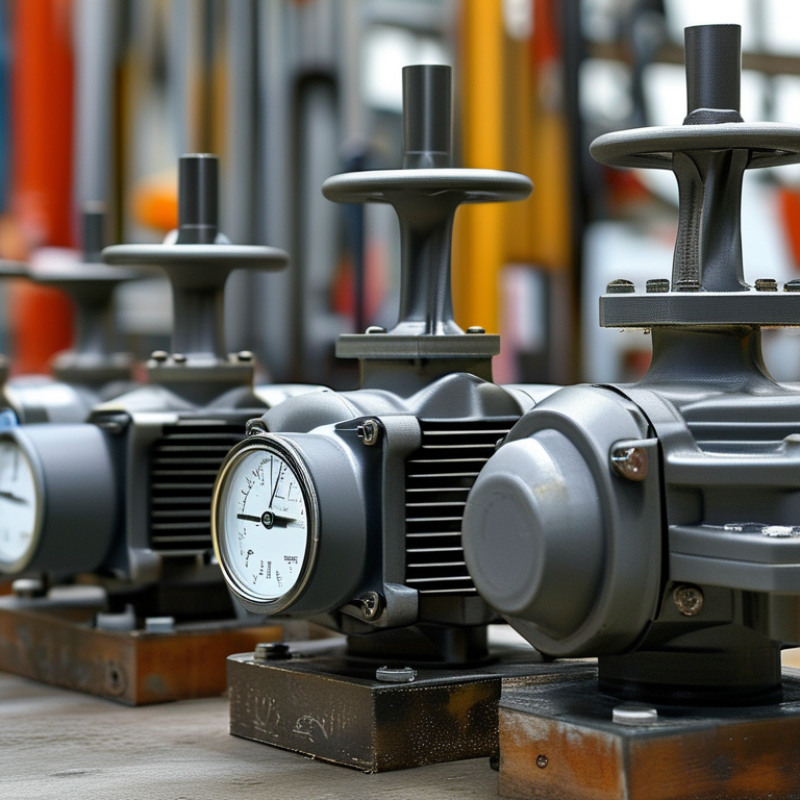
An HVAC oil pump moves lubricant through the compressor circuit. It protects bearings, seals, gears, and sliding surfaces from metal-to-metal contact. It also supports oil return after refrigerant carries droplets into discharge lines. Small pressure changes matter. Insufficient differential pressure can trigger a safety shutdown or accelerate wear. Too much flow can dilute performance and increase oil carryover. That balance is often missed.
The IEA’s The Future of Cooling report estimates cooling used about 2,020 TWh of electricity in 2016. That figure could reach roughly 6,200 TWh by 2050. Cooling already represents about 10% of global electricity demand. UNEP’s Cooling Emissions and Policy Synthesis Report warns that cooling demand may more than triple by 2050. As equipment fleets expand, dependable oil circulation becomes an operating issue, not a minor component choice. Pump sizing should match viscosity, refrigerant, compressor speed, oil temperature, and installation height.
Field inspections reveal an uncomfortable detail: a correctly sized pump can still fail in a dirty system. Blocked strainers, foaming oil, incorrect rotation, and poor oil-return piping create misleading symptoms. Pressure readings should be taken during startup and stable operation. Look for steady differential pressure, clean filtration, and normal sight-glass behavior. The ASHRAE Handbook—Refrigeration emphasizes oil management, but installations remain less tidy than diagrams. A catalog flow rate is not proof of reliability. Service records, material compatibility, test data, and regional support deserve equal scrutiny.
Technical comparison of common HVAC and refrigeration oil-pump configurations, selection factors, applicable standards, and manufacturer evaluation criteria. Performance figures are typical engineering ranges and must be confirmed against the final compressor, refrigerant, lubricant, and system design.
| Pump Configuration | Operating Principle | Typical Flow Range | Typical Differential Pressure | Suitable Oil Conditions | Primary Refrigeration Role | Advantages | Key Limitations |
|---|---|---|---|---|---|---|---|
| Gear Oil Pump | Intermeshing gears transfer lubricant from the suction side to the discharge side with positive displacement. | Approximately 0.2–30 L/min, depending on displacement and speed. | Commonly designed for approximately 2–10 bar differential pressure. | Low to medium viscosity oils; clean oil with controlled contamination levels. | Supplies oil to compressor bearings, crank mechanisms, journals, and other lubricated surfaces. | Compact construction, predictable displacement, good pressure capability, and relatively simple control. | Sensitive to abrasive particles; excessive clearance or excessive speed can reduce efficiency and increase wear. |
| Gerotor Oil Pump | An inner rotor and outer rotor create expanding and contracting chambers that move oil continuously. | Approximately 0.5–40 L/min in compact HVAC and compressor applications. | Commonly used in the approximate range of 1.5–8 bar differential pressure. | Low to medium viscosity lubricants, including many refrigeration compressor oils. | Provides forced lubrication in hermetic, semi-hermetic, and packaged compressor assemblies. | Low pulsation, compact size, good suction capability, and relatively quiet operation. | Performance depends strongly on rotor clearances, oil temperature, and correct inlet conditions. |
| Rotary Vane Oil Pump | Sliding vanes create changing-volume chambers that draw in and discharge lubricant. | Approximately 1–100 L/min, depending on pump size and rotational speed. | Often suitable for approximately 2–12 bar differential pressure. | Clean, lubricating oils with sufficient viscosity to seal vane-to-chamber clearances. | Oil circulation, oil recovery, and lubrication duties in larger refrigeration or industrial cooling packages. | Stable flow, good self-priming characteristics, and suitability for continuous circulation. | Vane wear, oil-temperature sensitivity, and potential damage from dry running or contaminated oil. |
| Screw Oil Pump | One or more screws transport oil axially through intermeshing helical cavities. | Approximately 5–500 L/min in medium and large industrial refrigeration systems. | Frequently applied at approximately 2–16 bar differential pressure. | Medium-viscosity oils; especially useful where smooth, continuous flow is required. | High-capacity lubrication, oil injection, oil separation support, and oil circulation in large compressors. | Low pulsation, high flow capacity, good continuous-duty performance, and comparatively low noise. | Higher cost, more demanding manufacturing tolerances, and sensitivity to gas entrainment or particulate contamination. |
| Centrifugal Oil Pump | A rotating impeller converts motor energy into velocity and then pressure in the circulating oil. | Approximately 5–1,000 L/min, depending on impeller diameter and system resistance. | Usually selected for relatively low to moderate head requirements, often below 6 bar differential pressure. | Clean, relatively low-viscosity oil; viscosity increase at low temperature must be considered. | Continuous oil circulation in large chillers, lubrication skids, and centralized refrigeration systems. | Smooth flow, simple continuous operation, and good suitability for high-volume circulation. | Limited suction lift, reduced performance at low speed, and possible loss of prime or cavitation if inlet conditions are poor. |
| Oil-Pressure Regulated Pump | A positive-displacement pump is paired with a relief, bypass, or regulating mechanism to maintain target oil pressure. | Determined by the base pump; commonly approximately 0.5–100 L/min. | Control range is system-specific; many compressor systems monitor oil pressure several bar above crankcase or suction pressure. | Oil viscosity, refrigerant dilution, temperature, and foaming must be evaluated together. | Maintains reliable lubrication when compressor load, speed, or oil temperature changes. | Improves protection against low oil pressure and accommodates variable operating conditions. | Requires correct sensor placement, relief-valve sizing, and calibration to avoid bypass heating or insufficient flow. |
| Electronic Variable-Speed Oil Pump | An electronically controlled motor adjusts pump speed in response to operating demand or oil-pressure feedback. | Variable output; commonly approximately 10–100% of rated flow. | Setpoint and available pressure depend on motor, controller, and compressor architecture. | Suitable for systems requiring accurate flow control across changing oil temperatures and compressor speeds. | Supports variable-speed compressors, capacity modulation, and energy-efficient oil management. | Demand-based control, reduced unnecessary circulation, and improved adaptability. | Higher system complexity; requires electrical compatibility, control logic, electromagnetic compatibility, and fault monitoring. |
| Oil Recovery Pump | Transfers oil collected in separators, reservoirs, or low points back to the compressor or oil reservoir. | Typically selected for intermittent or low-to-medium flow, often approximately 0.1–20 L/min. | Must overcome the complete return-line pressure loss and elevation difference. | Must tolerate refrigerant-diluted oil, entrained vapor, and the temperature range of the return circuit. | Reduces oil logging in evaporators, suction accumulators, separators, and low points in the system. | Supports oil balance and helps protect compressor lubrication during long pipe runs or low-load operation. | Incorrect timing or excessive return flow can disturb oil levels, cause liquid impact, or return excessive refrigerant. |
| Magnetic-Drive Oil Pump | A magnetic coupling transmits torque through a sealed barrier, eliminating a conventional dynamic shaft seal. | Approximately 0.2–100 L/min, depending on the pump design. | Commonly selected for approximately 1–10 bar differential pressure. | Useful where leakage control is important; oil cleanliness and magnetic compatibility must be verified. | Leakage-sensitive lubrication and circulation duties in enclosed or packaged refrigeration equipment. | Reduced external shaft-leakage risk and improved containment of lubricant. | Possible magnetic decoupling under overload, higher cost, and the need to control temperature and solids exposure. |
| Integrated Compressor Oil Pump | The pump is engineered as part of the compressor assembly and is driven mechanically or electrically by the compressor system. | Defined by compressor displacement, speed, oil viscosity, and internal lubrication requirements. | Must meet the compressor manufacturer’s specified oil-pressure and flow requirements. | Only oils approved for the compressor and refrigerant combination should be used. | Delivers oil to internal bearings, shafts, pistons, rotors, and other critical compressor components. | Optimized fit, compact packaging, and coordinated operation with compressor protection controls. | Replacement compatibility is limited; incorrect substitution can cause inadequate lubrication or internal damage. |
| External Oil Circulation Pump | A separately mounted motor-pump assembly circulates oil through filters, coolers, separators, and the compressor lubrication circuit. | Approximately 2–1,000 L/min, depending on system capacity. | Selected according to piping losses, filter loading, cooler resistance, and required compressor inlet pressure. | Allows external filtration, cooling, monitoring, and oil conditioning. | Used in large chillers, screw compressors, industrial refrigeration, and centralized lubrication systems. | Accessible maintenance, flexible layout, and easier integration of instrumentation and filtration. | Requires additional piping, valves, controls, space, and protection against low ambient temperature or oil solidification. |
| Manufacturer Evaluation Criteria | Evaluation should focus on documented engineering capability rather than catalog appearance alone. | Verify rated flow at the required oil temperature, viscosity, speed, and pressure. | Request pump curves, relief settings, allowable inlet vacuum, and continuous-duty limits. | Confirm compatibility with mineral oil, alkylbenzene, POE, PAG, or other specified lubricant types. | Assess experience with the selected refrigerant, compressor architecture, oil-return arrangement, and operating envelope. | Look for traceability, endurance testing, dimensional control, sealing quality, and technical support. | A pump should not be selected solely by nominal port size, motor power, or maximum theoretical flow. |
| Global Compliance and Documentation | Documentation should demonstrate suitability for the destination market and the intended refrigeration equipment. | Required data normally includes flow, pressure, speed, temperature, viscosity, and operating envelope. | Pressure-containing components should be assessed against applicable local pressure-equipment requirements. | Material declarations and lubricant compatibility records should be available where required. | Relevant references may include ISO 5149, EN 378, ASHRAE 15, IEC 60204-1, and applicable electrical or pressure regulations. | Clear drawings, test reports, certificates, spare-parts lists, and installation instructions reduce procurement risk. | Standards and certification requirements vary by country, equipment type, refrigerant classification, and installation environment. |

 Send Inquiry

