Top 10 Types of Metering Equipment for Global Buyers?
Choosing Metering Equipment is no longer a simple purchasing exercise. It affects billing accuracy, energy efficiency, water management, maintenance, and regulatory reporting. The IEA’s Energy Efficiency 2023 report emphasizes that reliable data supports better energy decisions. However, measurement quality still depends on installation, calibration, communication, and staff training.
The World Bank estimated that water utilities worldwide lost approximately 32 billion cubic metres annually through leakage and unauthorized consumption. That figure is older, but the warning remains relevant. A poorly selected flow meter can hide losses inside a clean-looking spreadsheet. The UN World Water Development Report 2024 also highlights growing pressure on water resources, making precise monitoring increasingly important.
Lord Kelvin, a pioneer of measurement science, stated: “When you can measure what you are speaking about, and express it in numbers, you know something about it.” His principle still guides modern Metering Equipment selection. Buyers should compare electromagnetic, ultrasonic, turbine, vortex, positive displacement, Coriolis, thermal mass, smart water, gas, and multifunction meters against actual operating conditions. Not every digital meter delivers better results. That assumption deserves challenge.
This Top 10 guide examines measurement range, accuracy, pressure loss, media compatibility, installation space, data protocols, calibration needs, cybersecurity, and total ownership cost. References to ISO 50001, OIML recommendations, IEC communication standards, and manufacturer testing records will support practical evaluation. Field experience matters, too. A meter that performs well in a laboratory may struggle with vibration, air bubbles, dirty fluids, or unstable temperatures. The best choice is rarely the most sophisticated one. It is the one that produces dependable data in the buyer’s real operating environment.
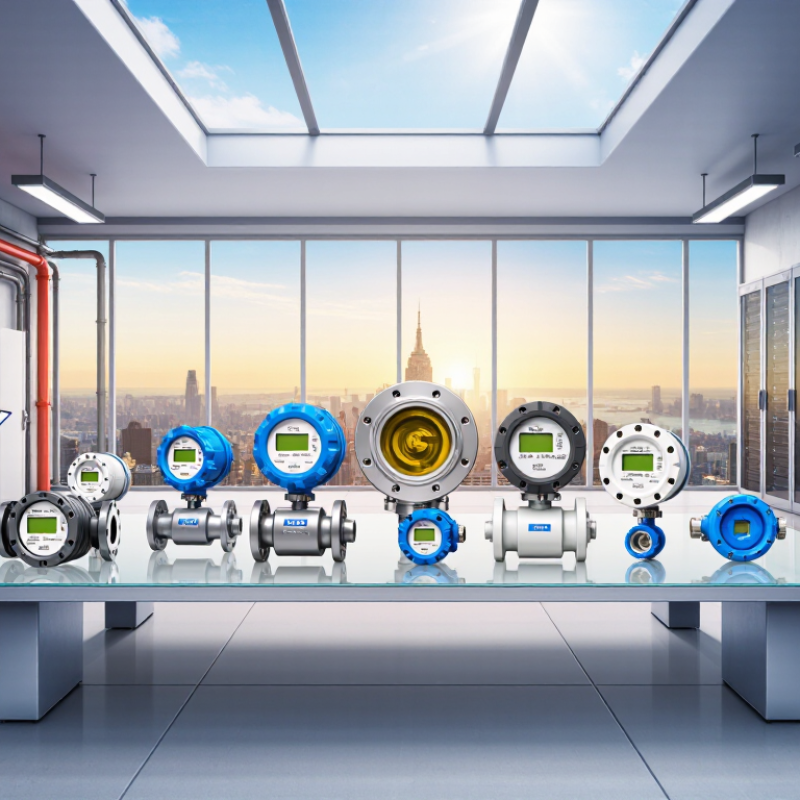
Understanding Metering Equipment and Its Role in Global Trade
Metering equipment converts physical movement into dependable numbers for trade, production, and inventory control. In global commerce, accurate measurement supports fair invoices and reduces shipment disputes. The ten common types include water, electricity, gas, heat, energy, fuel, liquid flow, mass flow, pressure, and level meters. Each type serves a different measurement task. A pressure meter cannot replace a mass flow meter. That mistake is costly.
Buyers should examine accuracy class, measuring range, construction materials, display options, data outputs, and calibration records. In a liquid shipment, a mass flow meter verifies the loaded quantity, while a level meter monitors the tank. Electricity meters can record consumption in warehouses, factories, and ports. Clear units, timestamps, serial numbers, and secure seals make records easier to check across borders. Independent calibration evidence adds credibility.
Installation is often underestimated. Condensation, vibration, unstable voltage, temperature changes, and poor pipe alignment can distort readings. Meters fail quietly. A capable supplier should explain testing procedures, maintenance intervals, replacement parts, and technical support. Local technicians also need understandable manuals and practical training. No selection method is perfect. A cheaper device may appear efficient, yet frequent recalibration can raise the real cost. Buyers should compare lifetime performance, not only the purchase price. Small data gaps still create large questions during customs checks or payment reviews.
The Top 10 Types of Metering Equipment by Application
Metering equipment should be chosen by application, not by appearance or catalog range. In municipal water lines, mechanical water meters suit steady, clean flow and modest budgets. Electromagnetic meters handle conductive wastewater, especially when solids or changing flow challenge moving parts. Ultrasonic meters fit large pipes where low pressure loss and clamp-on installation matter. For natural gas networks, diaphragm meters serve low-volume buildings, while turbine meters suit stable, higher-volume streams. Gas measurement needs pressure and temperature compensation. Without it, an accurate-looking reading can still mislead billing or process control. Steam systems commonly use vortex meters for hot, clean service, although vibration can disturb readings.
Positive displacement meters remain useful for oils, fuels, and other viscous liquids. They measure trapped volumes, but filters and maintenance are not optional. Coriolis meters measure mass flow in chemical dosing, food processing, and batch production. Differential-pressure meters work across many industrial lines, yet impulse tubes demand careful installation. Thermal mass meters are practical for compressed air and low-pressure gas monitoring. At site, I check straight-run length, pipe support, grounding, fluid temperature, and calibration records. Small details matter. A meter can pass a factory test and fail after poor alignment or air pockets. I have seen operators trust a stable display while ignoring a clogged strainer upstream. That experience changed my purchase checklist: verify process conditions, maintenance skills, and required uncertainty before comparing prices. Some selections still involve compromise. Lower cost may mean more manual verification.
Key Features and Measurement Principles of Each Meter Type
Global buyers should match each meter’s principle to the fluid, accuracy target, and installation conditions. Water meters commonly use mechanical displacement or ultrasonic transit time. Positive displacement meters trap fixed volumes, making them effective at low flow rates. Turbine meters measure rotor speed, but dirty fluids can damage performance. Electromagnetic meters calculate velocity from induced voltage and need conductive liquids. Ultrasonic meters compare sound travel times, with no moving parts. They are useful for large pipes, though poor installation can distort readings.
For gas and steam, vortex meters detect alternating pressure forces behind a bluff body. Differential-pressure meters calculate flow from pressure loss across an orifice or venturi. They are proven, but require square-root compensation and regular calibration. Coriolis meters measure tube deflection caused by mass movement, while also providing density data. Thermal mass meters sense heat transfer from a heated element and suit clean gases. Electricity meters measure voltage and current, then calculate energy, power factor, and demand. Advanced meters also support interval data and remote communication.
The U.S. Energy Information Administration reported more than 128 million advanced electricity meters in 2023, showing the scale of digital measurement. The International Energy Agency links digital monitoring with better grid visibility, but savings depend on customer response. That caveat matters. A smart meter cannot correct a poorly selected sensor. In field work, I have seen elegant systems fail because of air pockets, vibration, or an ignored grounding detail. Buyers should verify calibration traceability, operating temperature, pressure loss, communication protocols, and compliance with relevant IEC, ISO, or OIML requirements. Accuracy claims still need context.
Top 10 Types of Metering Equipment for Global Buyers
Key features, measurement principles, and representative typical accuracy for industrial metering applications.
The chart shows representative typical accuracy values expressed as a percentage of reading. Actual performance depends on the meter model, calibration, fluid properties, installation conditions, pipe geometry, and operating range.
| Meter Type | Measurement Principle | Key Features |
| Coriolis Mass Flow Meter | Measures Coriolis forces generated by vibrating flow tubes. | Direct mass flow and density measurement; high accuracy; suitable for liquids, gases, and difficult fluids. |
| Magnetic Flow Meter | Uses Faraday’s law to measure voltage induced by conductive fluid moving through a magnetic field. | No moving parts and very low pressure loss; requires electrically conductive liquid. |
| Ultrasonic Flow Meter | Determines velocity from ultrasonic transit-time differences or Doppler frequency shifts. | Non-intrusive options are available; low maintenance and suitable for large pipelines. |
| Vortex Flow Meter | Measures the frequency of vortices shed by a bluff body in the flow path. | Works with liquids, gases, and steam; has no moving parts and requires a stable flow profile. |
| Turbine Flow Meter | Relates rotor speed to fluid velocity as the fluid passes through the meter. | Good repeatability for clean, low-viscosity fluids; moving parts require filtration and maintenance. |
| Positive Displacement Meter | Separates the fluid into fixed-volume compartments and counts each displaced volume. | Accurate for viscous liquids and batch measurement; creates pressure loss and includes moving parts. |
| Differential Pressure Meter | Calculates flow from the pressure drop across an orifice plate, nozzle, or venturi tube. | Widely standardized and versatile; requires pressure transmitters and permanent pressure loss. |
| Thermal Mass Flow Meter | Measures heat carried away from a heated sensor by the flowing gas. | Direct gas mass-flow measurement with low pressure loss; sensitive to gas composition and contamination. |
| Variable-Area Flow Meter | Uses the equilibrium position of a float inside a tapered tube. | Simple, low-cost, and easy to read locally; best suited to indication and low-flow applications. |
| Open-Channel Flow Meter | Calculates flow from measured liquid level and a calibrated weir, flume, or channel geometry. | Useful for wastewater and irrigation channels; accuracy depends strongly on installation and level measurement. |
Global Standards, Certifications, and Compatibility Requirements
Top 10 Types of Metering Equipment for Global Buyers
Global buyers should evaluate metering equipment by application, standards, and site conditions. Common categories include water, gas, steam, electricity, thermal energy, fuel, flow, pressure, level, and power-quality meters. Each type measures differently. A steam meter may require high-temperature materials, while a water meter needs corrosion resistance and stable low-flow performance.
Global compatibility is more than checking voltage or pipe size. Review applicable IEC, ISO, OIML, MID, UL, or national standards before purchasing. Certification requirements can differ by country and end use. Verify accuracy class, ingress protection, hazardous-area approval, electromagnetic compatibility, and calibration traceability. A valid certificate does not guarantee field performance. Installation conditions still matter. Thread standards, flange dimensions, communication protocols, and software languages can create unexpected delays. I have seen technically accurate meters fail because their outputs did not match an existing control system.
Tips: Request certificates, test reports, calibration records, and a clear compatibility matrix. Confirm whether approvals apply to the complete meter or only selected components. Check operating temperature, pressure, fluid composition, and maintenance access. Ask for sample data before large orders. This small step can expose integration problems early. Also, leave room for uncertainty. Local inspectors may interpret requirements differently, and specifications sometimes change during a project. Rechecking the latest rules is safer than relying on an old supplier document.
How Buyers Can Compare, Select, and Source Metering Equipment
Global buyers should compare metering equipment by application, not appearance. The main categories include electricity, gas, water, flow, pressure, temperature, energy, electromagnetic, ultrasonic, and smart meters. IEA’s Electricity 2024 report expects global electricity demand to grow by an average of 3.2% annually from 2024 to 2026. That growth increases pressure on measurement accuracy and data availability.
Start with the medium, operating range, accuracy class, and installation environment. A clean-water ultrasonic meter may fail in air-filled pipes. An electromagnetic model needs conductive liquid.
For electricity meters, check IEC 62052 and IEC 62053 requirements, communication protocols, load profiles, and calibration records. FAO reports that agriculture uses about 70% of global freshwater withdrawals, making durable flow measurement important for irrigation projects.
Do not compare price alone.
Source through qualified manufacturers, independent distributors, and accredited testing laboratories. Request sample reports, ingress protection ratings, temperature limits, cybersecurity controls, warranty terms, and spare-parts lead times.
The IEA’s Electricity Grids and Secure Energy Transitions report estimates that annual grid investment must rise above 600 billion dollars by 2030. Buyers should therefore evaluate long-term maintenance, not only the purchase order.
A practical test is useful. Install one unit beside the existing meter and compare readings across several operating cycles. Procurement teams often overlook local technician skills. That mistake can make an accurate meter unreliable in practice.
Supplier claims still need field verification.




 Send Inquiry

