Why Are Rail Crossing Signals Important?
A Rail Crossing Signal is more than a flashing light beside the road. It is a carefully engineered warning system. It gives drivers, cyclists, and pedestrians a few critical seconds to make a safe decision.
At a crossing, bells may sound, red lights may alternate, and barrier arms may descend. These separate signals create repeated visual and audible warnings. They also help at night, during rain, and near loud industrial areas. A locomotive may weigh thousands of tons and require a long distance to stop. The driver cannot avoid a vehicle that enters the tracks unexpectedly.
Amit Bose, former Administrator of the Federal Railroad Administration, has stressed, “Rail safety is a shared responsibility.” That principle includes railway operators, signal manufacturers, maintenance teams, local authorities, and road users. Each group affects the system’s reliability.
The technology is impressive. Yet technology is not perfect. A damaged cable, blocked sightline, weak battery, or ignored warning can reduce protection. Regular inspections, recorded maintenance, and prompt repairs are essential. Engineers also study near-misses, not only collisions. Those moments reveal risks before serious harm occurs.
Consider a familiar scene. The lights begin flashing. The bell rings. A truck waits behind the painted line while a freight train passes, shaking the nearby pavement. That pause may feel inconvenient. It is not wasted time.
The uncomfortable truth is simple. Human judgment still matters. A Rail Crossing Signal can warn us, but it cannot choose for us. Its importance lies in creating that final, visible chance to stop.
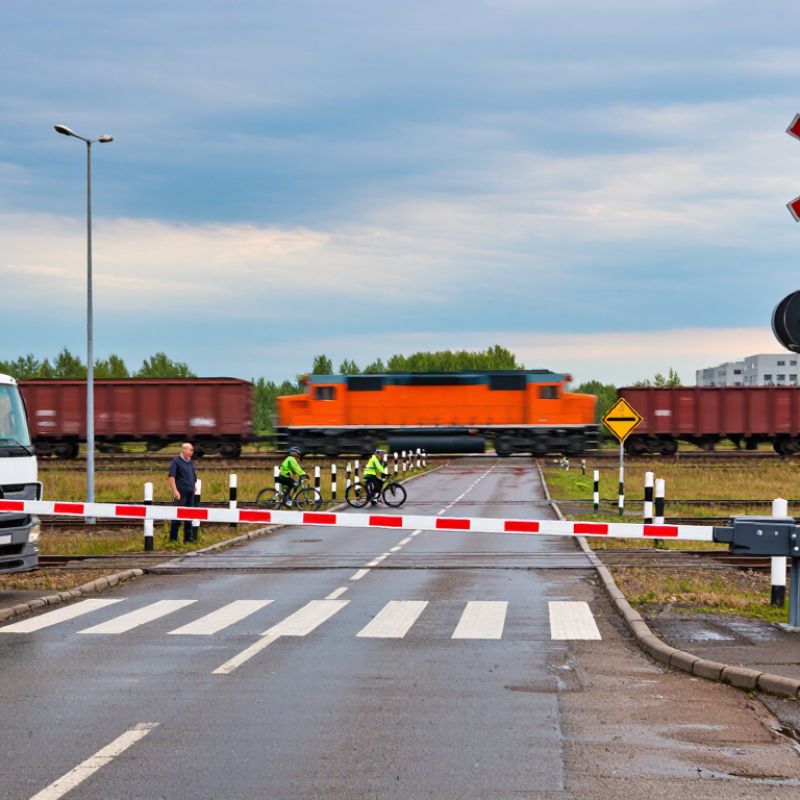
Rail crossing signals warn road users that a train may approach or occupy the tracks. They are part of a coordinated safety system, not simple roadside lights. Track circuits or electronic sensors detect a train’s movement near the crossing. A control unit then activates flashing red lights, bells, and, where installed, lowered gates. The warning usually begins before the train reaches the road, allowing vehicles and pedestrians time to stop safely. Timing depends on track layout, train speed, road design, and local safety standards.
The red lights require a complete stop behind the marked line. A lowered gate confirms that crossing is unsafe. Trains need a long distance to stop, even when the operator reacts quickly.
A useful field observation is that warning sounds can become difficult to hear near heavy traffic or inside a closed vehicle. That is why signals use several forms of communication. It is easy to assume every crossing works perfectly, but equipment can fail or become harder to see. Never treat silence as permission to cross.
Tips:
Slow down before the crossing. Look both ways. Listen carefully. Stop when lights flash or bells sound. Keep clear of the tracks and gates. Do not drive around a lowered barrier. If a signal appears damaged, report it through the appropriate local authority. Mistakes happen, and rushing makes them worse.

Why Rail Crossing Signals Are Essential for Safety
Rail crossing signals create a clear warning when a train is approaching. Flashing lights, bells, and lowered gates give drivers time to stop. Track circuits and predictive warning systems detect train movement before danger reaches the crossing. The message is simple: stop and wait.
The need is measurable. The Federal Railroad Administration recorded 2,192 highway-rail crossing incidents in the United States during 2023. Its data included 264 fatalities and 807 injuries. These figures show why crossing equipment must work reliably, even during rain, darkness, or heavy traffic. A driver may notice red lights before hearing a horn. A cyclist may need extra seconds to judge a train’s distance. Gates also make the danger visible when attention is divided.
Signals cannot remove every human mistake. A blocked view, loud music, or impatience can defeat good equipment. Some crossings also have unusual layouts that confuse unfamiliar drivers. That weakness deserves more attention. Regular inspections should check lamp brightness, bell volume, gate timing, warning signs, and pavement markings. The FRA’s Highway-Rail Crossing Inventory supports this maintenance approach by documenting crossing characteristics and safety devices nationwide. Drivers still need to stop behind the line and never drive around a lowered gate. It only takes one poor decision.
| Safety Dimension | Signal or Safety Feature | What It Communicates | Required Road-User Response | Safety Benefit |
|---|---|---|---|---|
| Early awareness | Advance warning signs and pavement markings | A railway crossing is ahead and conditions may require a complete stop. | Reduce speed, scan both directions, and prepare to stop. | Gives drivers, cyclists, and pedestrians more time to make a safe decision. |
| Crossing identification | Crossbuck or railway-crossing sign | The roadway and railway intersect at this location. | Treat the crossing as a yield or stop-controlled hazard, according to local law. | Makes the crossing recognizable even when no train is visible. |
| Train approach alert | Alternating flashing red warning lights | A train is approaching, occupying the crossing, or the warning system is active. | Stop before the stop line or designated stopping point and remain stopped. | Provides a highly visible warning in daylight, darkness, and poor weather. |
| Audible warning | Bell, horn, or other audible alarm | A crossing warning is active, including when visual conditions are limited. | Stop and do not proceed until the warning ends and the crossing is clear. | Supports people who may not immediately see the lights, including distracted or visually impaired road users. |
| Physical protection | Lowering gates or barriers | The crossing must not be entered because a train is approaching or present. | Stop before the gate; never drive around, under, or through a lowered barrier. | Creates a strong physical and visual boundary against entering the track area. |
| Track clearance | Stop line and clear-zone markings | The safe stopping position is before the tracks and away from moving rail equipment. | Stop at the marked location and keep the crossing exit clear. | Reduces the risk of a vehicle being trapped on the tracks or struck by a train. |
| Visibility improvement | Reflective surfaces, lighting, and illuminated signs | The crossing and its warning equipment remain identifiable at night or in low visibility. | Slow down, keep headlights and windows clear, and check for trains. | Improves recognition when darkness, rain, fog, or glare reduces sight distance. |
| Decision reliability | Multiple coordinated warning methods | Visual, audible, and physical warnings reinforce the same stop instruction. | Obey the most restrictive warning and wait until it is safe and legal to proceed. | Reduces dependence on a single sense or a single piece of equipment. |
| Emergency response | Emergency notification instructions | A stopped vehicle, damaged equipment, or obstruction on the tracks requires immediate reporting. | Move away from the tracks when possible and contact the appropriate emergency service using the posted information. | Helps responders identify the exact crossing and address a dangerous obstruction quickly. |
Safety principle: A train has a much longer stopping distance than a road vehicle, so rail crossing signals are designed to provide advance notice and prevent road users from entering the track area when a train is approaching.
Rail crossing signals provide a critical warning before a train reaches the tracks. Flashing red lights mean drivers must stop behind the marked line. Bells and lowering gates demand the same response. Never drive around a lowered gate, even when the track appears clear. Trains can approach quietly, and their speed may be difficult to judge. Signal timing can also vary by crossing design and train movement.
Drivers should reduce speed when approaching every crossing, especially during rain, darkness, or heavy traffic. Keep enough space to stop without blocking the tracks. Look both ways after stopping, but never treat a silent signal as permission to proceed. A train may be close. If traffic prevents you from clearing the tracks, wait before entering.
If a vehicle stalls on the tracks, leave immediately and move away from the rails. Contact local emergency services from a safe location.
Pedestrians should use designated walkways and obey gates, lights, bells, and posted signs. Do not walk beneath a gate or cross after warning lights begin. Hold a child’s hand near the crossing. Remove headphones so warning sounds remain audible.
I once underestimated how quickly a distant train could arrive. That mistake changed how carefully I watch crossings. A clear track is not always a safe track. Hesitation is safer than guessing.
Modern rail crossing systems combine several technologies to warn drivers, cyclists, and pedestrians before a train arrives. Track circuits detect electrical changes caused by train wheels. Axle counters measure wheels entering and leaving a defined section. These methods help determine a train’s position and movement.
Warning lights flash clearly, while bells provide an audible alert near busy roads. Automatic gates create a physical barrier when a crossing becomes unsafe. Some systems also use radar or optical sensors to detect vehicles trapped between the gates. This extra layer can send an immediate warning to railway control staff.
Redundant communication links connect crossing equipment with monitoring centers. Battery backup keeps signals operating during power failures. Technicians inspect cables, sensors, gate mechanisms, and warning times during scheduled maintenance. Small delays matter. A damaged cable or weak battery can reduce safety margins.
Real-world conditions remain difficult. Heavy rain, snow, dust, and bright sunlight may affect sensors. False alarms can also reduce public trust if they happen too often. Engineers must balance sensitivity with dependable operation. I have seen how a simple inspection can reveal loose wiring before it becomes a serious fault. Still, no system removes human error completely. Safer crossings require reliable technology, trained maintenance teams, and public attention every time the signals activate.
Rail crossing signals are not decorative warnings. They communicate a changing risk that drivers and pedestrians cannot always see. Flashing lights, bells, and lowered gates mean a train may be approaching, even when the tracks look empty. A train can travel faster than it appears and may need hundreds of metres to stop. The danger is immediate.
Ignoring these signals can cause crushing collisions, severe injuries, deaths, and major transport delays. A vehicle stopping on the tracks can trap its occupants within seconds. Trying to cross after the lights begin flashing is especially dangerous because the train’s distance may be misjudged. Some people also drive around lowered gates when they feel impatient. That decision can destroy several lives. A quiet crossing can deceive me, too. Silence does not mean safety. Safety guidance repeatedly stresses stopping behind the marked line and waiting until every warning has ended. Yet people still underestimate familiar roads.
Tips: Approach slowly and remove distractions. Stop before the line when lights flash, bells sound, or gates lower. Look both ways, but never treat looking as permission to cross against a signal. If your vehicle stalls on the tracks, leave it immediately and move away from the rails. Then contact local emergency services from a safe location. Cyclists and pedestrians need extra care because headphones, darkness, and poor visibility can hide warnings. I sometimes think an extra minute feels inconvenient. It is. Still, impatience is a poor reason to gamble with a moving train.
For an immediate response, please call this
number08045801431
Price:
