Why Choose a Steel Security Door for Global Projects?
Choosing the right Steel Security Door can shape the safety, durability, and operating cost of a global project. From warehouses in humid ports to offices in dry inland regions, each site presents different risks. A reliable door must resist forced entry, weather exposure, frequent use, and installation challenges.
Experienced project teams examine more than steel thickness. They review frame design, hinge strength, lock compatibility, drainage, surface treatment, and maintenance access. A galvanized or powder-coated finish may help protect against corrosion, but local climate data still matters. Coastal salt can attack exposed hardware quickly. Dust can affect locks and closing mechanisms. Small details become expensive problems.
Security performance should be supported by documented testing and clear technical specifications. Fire ratings, acoustic performance, accessibility features, and emergency egress requirements may vary between countries and project types. Reputable manufacturers provide drawings, material information, test reports, and installation guidance. These documents help architects, contractors, and inspectors make informed decisions.
Still, no door solves every security concern. Even a strong assembly can fail through poor anchoring, incorrect alignment, or neglected maintenance. That point is easy to overlook. Site conditions may also differ from the original design assumptions. Regular inspections, spare hardware, and trained installers can improve long-term reliability. A careful specification balances protection, appearance, budget, and daily usability. For international projects, that practical balance often matters more than impressive claims.
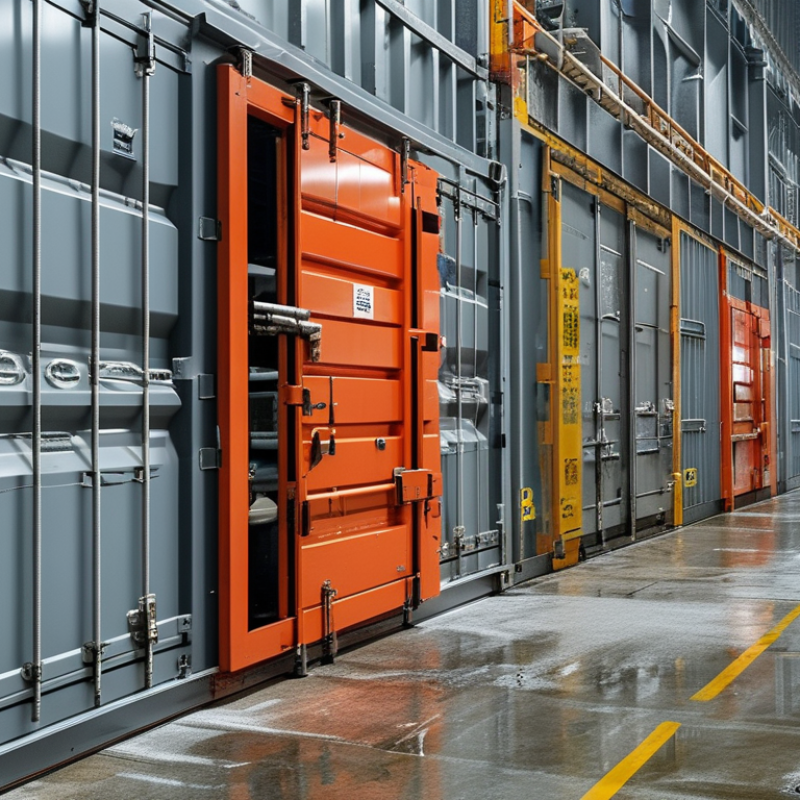
Steel Security Doors Defined: Materials, Cores, and Threat Levels
A steel security door combines a formed steel face, reinforced edges, hinges, locks, and a selected core. Steel alone is incomplete. Honeycomb cores reduce weight and improve rigidity, while mineral cores support fire-resistance designs. Polyurethane cores can improve insulation, but they require careful fire testing. The core matters.
The 2023 FBI Crime Data Explorer estimated 847,522 burglary offenses in the United States. That figure does not define every project, but it shows why threat assessment should precede product selection. EN 1627 classifies forced-entry resistance from RC1 to RC6. UL 752 addresses ballistic-resistant performance, while fire doors follow separate testing routes, such as EN 1634-1 or NFPA 252. These ratings are not interchangeable. A door resisting impact may still fail smoke, heat, or forced-entry requirements.
Global projects also face salt air, dust, heavy traffic, and uneven installation skills. Specify galvanized or corrosion-resistant steel where exposure demands it. Check the complete door assembly, not only the leaf. Test reports should identify dimensions, hardware, frame construction, and installation conditions. A small frame gap can undermine impressive laboratory results. That is easy to overlook. Project teams sometimes choose the highest rating without matching the actual threat. This increases cost and weight, and may create daily usability problems. A practical specification connects material, core, rating, climate, and maintenance evidence.
Forced-Entry Resistance: EN 1627 RC2–RC6 Classification and Testing
Why Choose a Steel Security Door for Global Projects?
For global projects, a steel security door should be judged by tested performance, not appearance alone. EN 1627 classifies complete doorsets from RC2 to RC6 against forced-entry resistance. The rating covers the door leaf, frame, hinges, locking points, glazing, and installation method. A strong leaf cannot compensate for a weak frame. It is one system.
RC2 testing addresses opportunistic attacks using simple hand tools. RC3 introduces more persistent attempts and heavier hand tools. RC4 considers experienced attackers using additional tools and greater force. RC5 and RC6 require resistance against more powerful equipment and longer attack periods. Testing is controlled, repeatable, and performed on a representative doorset. Laboratory evidence matters. So does the test configuration.
Tips: Request the full EN 1627 report, not only a class label. Check the tested dimensions, hardware, wall connection, glazing, and installation details. Confirm that the proposed site assembly matches the tested design.
In real projects, installation is often the weak point. Small gaps around the frame can reduce practical protection. Poor alignment may affect locking performance. Weather exposure can also change steel movement and seal behavior. A perfect laboratory result may disappoint on site. That deserves honest review. Select the RC level according to the building’s threat assessment, occupancy, and local requirements, then verify the installer’s method carefully. RC6 is not automatically the best choice for every entrance. Balance resistance, access frequency, maintenance, and emergency egress needs.
Why Choose a Steel Security Door for Global Projects?
EN 1627 classifies pedestrian doors by resistance to defined manual attack methods. Higher resistance classes require longer laboratory attack exposure and more demanding tools.
The values show the minimum manual attack time used for classification: RC2–RC6 range from 3 to 20 minutes. These are standardized laboratory test durations and should not be interpreted as a guaranteed real-world delay.
Fire and Smoke Protection: EN 1634-1 EI30–EI120 Performance Ratings
For global projects, a steel security door must protect people, equipment, and escape routes under severe conditions. EN 1634-1 evaluates complete door assemblies, including the leaf, frame, hinges, locks, seals, and glazing. EI30, EI60, EI90, and EI120 indicate tested fire resistance for 30 to 120 minutes. “E” represents integrity, while “I” represents insulation. The rating applies only to the tested configuration, not every similar-looking door. This detail is often missed.
Smoke protection needs careful specification. EN 1634-1 focuses mainly on fire resistance. Smoke leakage classifications, such as Sa or S200, may require additional testing and documentation under relevant standards. On a real site, a small frame gap can undermine a strong laboratory result. Installation quality matters. So does maintenance. A damaged intumescent seal may remain unnoticed until an emergency.
Tips: Request the complete test report, classification report, and approved installation method. Check the wall type, hardware, glazing, threshold, and maximum dimensions. Confirm whether the required smoke class matches the project’s local regulations. Avoid selecting EI120 only because it sounds safer; excessive specifications can increase weight, cost, and installation difficulty. A practical review with the fire consultant is wiser. Sometimes, the overlooked hinge matters most.
Corrosion Durability: ISO 12944 C3–C5 Protection for Global Environments
A steel security door must resist more than forced entry. It must also survive changing climates, transport, installation, and daily use. ISO 12944 provides a practical framework for selecting corrosion protection. C3 suits moderate environments, such as urban buildings with limited pollution. C4 addresses higher humidity, industrial exposure, and coastal conditions. C5 is intended for very severe environments, including heavy industrial or marine areas.
The coating system should match the project location, not a general sales description. Surface preparation, primer selection, edge coverage, and dry-film thickness all affect long-term performance. Salt finds gaps. Welds and door bottoms deserve special attention because water often collects there. On site, inspectors should check coating thickness, adhesion, damaged areas, and fastener compatibility. ISO 12944 durability categories indicate expected coating performance, not a permanent guarantee. That distinction is easy to overlook.
Tips: Confirm the corrosivity category before production. Specify the target durability period. Protect exposed edges during handling and installation. Review hinges, locks, frames, and seals as one system. A strong coating can still fail when water remains trapped behind a frame. We have learned that small installation details often decide the final result. Rechecking them may feel repetitive, but it prevents expensive repairs across international projects.
Why Choose a Steel Security Door for Global Projects? - Corrosion Durability: ISO 12944 C3–C5 Protection for Global Environments
Corrosion-risk reference for specifying steel security doors, frames, hardware, and protective coating systems in international projects.
| ISO 12944 Corrosivity Category | Typical Atmospheric Environment | First-Year Corrosion Rate of Carbon Steel* | Typical Project Locations | Recommended Door Protection Approach | Key Design Considerations |
C3
Medium | Urban and industrial atmospheres with moderate pollution; coastal areas with low salinity. | Steel mass loss: >200–400 g/m²
Steel thickness loss: >25–50 μm | Commercial buildings, inland transport facilities, schools, offices, and moderate industrial sites. | Prepare steel to the specified cleanliness level, seal joints and edges, and apply a compatible multi-coat protective system suitable for C3 exposure. | Protect cut edges, welds, hinge recesses, lock pockets, and drainage points. Avoid water-trapping geometry. |
C4
High | Industrial atmospheres with significant pollution or coastal atmospheres with moderate salinity. | Steel mass loss: >400–650 g/m²
Steel thickness loss: >50–80 μm | Manufacturing plants, logistics hubs, wastewater facilities, ports, coastal infrastructure, and transport terminals. | Use a documented C4-rated coating specification, commonly incorporating a corrosion-resistant primer and compatible intermediate and finish coats. | Specify enhanced edge coverage, sealed steel-to-steel interfaces, corrosion-resistant fasteners, and a controlled touch-up procedure after installation. |
C5
Very High | Very high industrial or marine atmospheric exposure with aggressive pollutants, persistent humidity, or high salinity. | Steel mass loss: >650–1,500 g/m²
Steel thickness loss: >80–200 μm | Heavy industrial zones, offshore-adjacent facilities, exposed marine infrastructure, chemical-processing areas, and high-salinity coastal sites. | Use a project-approved C5 coating system with rigorous surface preparation, high-build corrosion protection, sealed interfaces, and documented inspection records. | Consider sheltered versus exposed faces, salt contamination, condensation, chemical contact, water drainage, and maintenance access before finalizing the specification. |
Material Selection
Select steel grade, door construction, fasteners, hardware, and seals according to the exposure category and project environment.
Coating Verification
Verify surface preparation, environmental conditions, dry-film thickness, adhesion where specified, curing, and repair quality.
Maintenance Planning
Inspect coating damage, sealant joints, drainage paths, hinges, locks, and exposed edges at scheduled intervals.
Technical note: ISO 12944 corrosivity categories describe the corrosivity of atmospheric environments and the associated first-year corrosion-rate ranges. They do not by themselves guarantee a specific service life for a steel security door. Final durability depends on the selected coating system, surface preparation, design details, application quality, exposure conditions, inspection, and maintenance.
*Corrosion-rate ranges are based on the ISO 12944 classification of atmospheric corrosivity for unprotected carbon steel during the first year of exposure. Project specifications should confirm the applicable ISO 12944 edition, coating system, durability range, and inspection requirements.
Project Compliance: UL 10C, EN 14351-1, and Local Building Requirements
Why Choose a Steel Security Door for Global Projects?
Project Compliance: UL 10C, EN 14351-1, and Local Building Requirements
Steel security doors support demanding projects because they combine impact resistance, controlled access, and predictable fire performance. NFPA reported 1,504,500 fires in the United States during 2023. That figure makes tested fire assemblies more than a specification detail. They protect escape routes, equipment rooms, and service corridors.
UL 10C evaluates fire door assemblies under positive pressure conditions. A compliant assembly requires more than a strong steel leaf. The frame, hinges, latch, glazing, seals, and installation method must match the tested configuration. EN 14351-1 addresses performance requirements for external pedestrian doorsets and windows. It does not replace every fire or smoke standard. Projects may also require EN 16034, national classifications, or documented reaction-to-fire performance.
Local building requirements can change the final design. Authorities may review escape width, accessibility, thermal transmittance, wind resistance, corrosion protection, and hardware operation. Experienced project teams compare the door schedule with the authority’s latest approval notes. They also check test reports, declarations, factory quality records, and site installation details.
A common mistake is treating certification as a universal passport. It is not. A door tested in one configuration may fail acceptance after unapproved hardware changes. Field conditions are rarely perfect. Openings can be uneven, and installation teams may improvise. That risk deserves attention during submittal review, mock-up inspection, and final commissioning.




 Send Inquiry

