Choosing reliable Pump Hoses manufacturers and suppliers in China requires more than comparing prices or browsing polished catalogs. Industrial buyers must examine material quality, pressure ratings, temperature resistance, and production consistency. A hose that looks strong may still fail under repeated bending, chemical exposure, or sudden pressure changes. That risk deserves careful attention.
Experienced suppliers usually explain their reinforcement structure, tube materials, cover compounds, and connection options clearly. They should provide product data, inspection records, and practical guidance for installation. Relevant certifications and testing reports can support credibility, but documents should be verified rather than accepted without questions. Factory visits, sample testing, and third-party inspections may reveal details that product pages hide. Small details matter.
This guide reviews leading Chinese manufacturers and suppliers through a practical purchasing lens. It considers manufacturing experience, application knowledge, customization ability, export service, quality control, and after-sales communication. Applications may include hydraulic systems, water transfer, oil handling, mining, construction, and industrial processing. Each use demands different hose designs.
No supplier is perfect.
A low-cost option may reduce immediate spending but create replacement problems later. Likewise, a famous supplier may not suit every project or delivery schedule. Buyers should compare technical fit, traceability, production capacity, and long-term reliability before making a decision. The most dependable choice is usually the supplier that answers difficult questions clearly, tests consistently, and admits where its products have limitations.

Pump hoses are flexible conduits that move water, chemicals, slurry, fuel, or other fluids between pumps, tanks, and pipelines. They absorb vibration and simplify installation where rigid pipes cannot bend safely. In China, they support construction dewatering, mining, agriculture, municipal treatment, and industrial processing. UN-Water’s World Water Development Report 2024 states that agriculture accounts for about 70% of global freshwater withdrawals. That pressure makes reliable water-transfer equipment increasingly important.
A suitable pump hose needs more than high pressure resistance. Engineers check inner diameter, temperature range, abrasion resistance, bend radius, reinforcement, and chemical compatibility. A hose that looks strong may still collapse under suction.
Small detail, serious consequence.
The Global Industrial Hose Market report by Grand View Research estimated the market at roughly 14 billion US dollars in 2023, with continued growth expected through 2030. This figure shows demand, but it does not prove equal quality among manufacturers or suppliers in China.
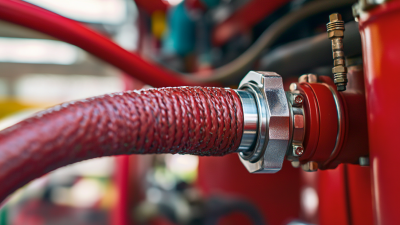
Practical buyers should request pressure-test records, material specifications, batch traceability, and performance data under real operating conditions. Couplings deserve equal attention. Poorly matched fittings can leak, loosen, or damage the hose during vibration.
ISO 1307 provides dimensional and tolerance guidance for rubber and plastics hoses, helping purchasers compare products more consistently. Yet standards alone are not enough. Actual inspection, transparent documentation, and careful application matching remain necessary.
The weak point is often not the pump. It is the connection.
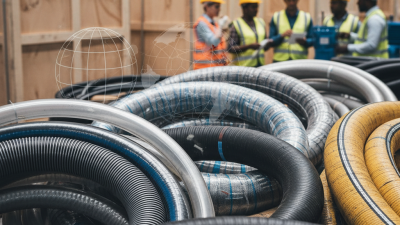
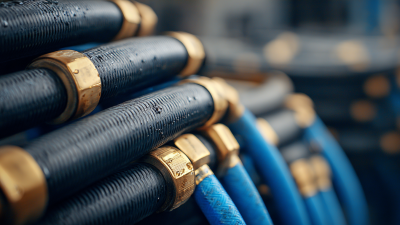
China manufactures pump hoses for many working conditions, from water transfer to heavy industrial service. Suction and discharge hoses are common choices for moving water, slurry, fuel, and mild chemicals. Suction hoses usually have reinforced walls and embedded spirals. These structures help prevent collapse under negative pressure. Discharge hoses often use textile reinforcement for pressure resistance and flexibility.
Hydraulic pump hoses are built for high-pressure systems and frequent movement. Concrete pump hoses require thick covers and strong end connections because abrasive mixtures can damage weak materials. Food-grade hoses use smooth inner walls, reducing residue around fittings. Chemical hoses need compatible tube materials, protective covers, and tested temperature limits. Manufacturers may also produce layflat hoses, dredging hoses, and air or oil delivery hoses. The right type depends on pressure, temperature, media, bend radius, and connection size.
Tips: Check the hose’s working pressure, not only its burst pressure. Confirm the actual fluid and temperature range with the supplier. Inspect couplings, clamps, and sealing surfaces before operation. A longer hose is not always better; excess length can increase pressure loss and movement. Ask for material data, test records, and traceable production details. Specifications can look complete but still miss abrasion resistance. Field conditions often reveal that weakness. Review samples under realistic bending and pumping cycles before placing a large order.
Choosing a Chinese pump hose supplier requires more than comparing prices. Examine the factory’s experience with suction, discharge, chemical, food-grade, or slurry applications. A hose designed for clean water may fail under abrasive material. Ask for evidence.
Request technical sheets showing inner diameter, working pressure, burst pressure, temperature range, bend radius, and reinforcement layers. Check whether these figures match your operating conditions, not just laboratory samples. A 50-meter hose can lose performance when dragged across concrete. Details matter.
Evaluate production controls through sample testing, material records, and batch traceability. Confirm how the supplier checks wall thickness, coupling strength, and leakage before shipment. Independent test reports can support claims, but inspect their dates and scope carefully. A polished certificate is not enough. Ask for evidence.
Communication also reveals reliability. Send a drawing with tolerances and connection requirements, then review the response for precise questions. Suppliers that notice missing information may understand engineering risks better. Factory videos help, but a live inspection offers stronger evidence. If possible, order samples from the intended production line. One weakness remains: small orders may receive more attention than regular batches. Discuss repeat-order consistency before signing a supply agreement. Keep written records of specifications, inspections, packaging, and corrective actions.
| Evaluation Dimension | Relevant Technical Benchmark | Recommended Supplier Evidence | Suggested Assessment |
|---|---|---|---|
| Application suitability | The hose should be selected according to the pumped medium, temperature, pressure, abrasion level, bending conditions and installation environment. | A completed technical questionnaire, product datasheet and written compatibility confirmation for the actual medium. | Reject suppliers that provide only a general pressure rating without application-specific recommendations. |
| Pressure rating | Working pressure must exceed the maximum continuous system pressure, including pulsation and transient pressure. ISO 18752 classifies hydraulic hose performance by pressure, impulse and application severity. | Working-pressure and burst-pressure data, impulse-test results where applicable, and a clearly stated safety factor. | Use the complete operating envelope rather than comparing working pressure alone. |
| Temperature range | The stated range should cover both the pumped fluid temperature and the surrounding environment. Rubber compound limits vary by material and fluid. | Temperature ratings for continuous and intermittent service, together with the hose-cover and tube-material specifications. | Check the rating against actual peaks, not only normal operating temperature. |
| Construction and reinforcement | Common constructions include textile braid, wire braid, wire spiral and fabric-reinforced hose. Construction affects pressure, flexibility, weight and minimum bend radius. | Cross-sectional construction description, reinforcement material, inner-tube material, cover material and dimensional drawings. | Give higher scores to suppliers that provide traceable material and construction details. |
| Standards and conformity | Depending on the application, relevant references may include ISO 18752, ISO 3862, EN 853, EN 856, EN 857, SAE hose specifications and applicable food, chemical or marine requirements. | Certificate numbers, scope of certification, applicable product standard, test method and issuing laboratory or certification body. | Verify that certificates cover the exact hose construction and size being quoted. |
| Dimensional accuracy | Important dimensions include inside diameter, outside diameter, wall thickness, length tolerance, fitting dimensions and minimum bend radius. | Controlled drawings, inspection records, calibrated measuring equipment and sample measurement reports. | Require dimensional approval before mass production or assembly. |
| Hydrostatic and leak testing | Pressure testing should follow the specified product standard or agreed inspection plan. Finished assemblies should be checked for leakage and fitting security. | Batch test records showing test pressure, test duration, test medium, date, operator and inspection result. | Treat undocumented testing as a significant quality risk. |
| Fitting and assembly quality | Assembly performance depends on correct fitting type, insertion depth, crimp dimensions, cleanliness and compatibility between hose and connector. | Crimp charts, fitting compatibility tables, assembly procedures, pull-off or pressure-test records and end-of-line inspection results. | Evaluate complete assemblies separately from bulk hose. |
| Flexibility and bend radius | The minimum bend radius must be respected during installation and operation. Repeated bending, twisting and side loading can shorten service life. | Published minimum bend radius, flexing guidance, installation instructions and sample validation under actual routing conditions. | Prefer designs that meet the required routing envelope without forced bending. |
| Material and fluid compatibility | The tube and cover must resist the pumped fluid, cleaning agents, ozone, ultraviolet exposure, abrasion and ambient contaminants relevant to the service. | Compound designation, compatibility chart, chemical-resistance data and written limitations for concentration and temperature. | Do not rely on the generic term “oil resistant” or “chemical resistant” without test conditions. |
| Manufacturing quality system | A documented quality system should control incoming materials, production parameters, inspection, nonconforming products and corrective actions. | Current quality-management certificate, process flow chart, inspection plan, internal audit records and corrective-action procedure. | Audit the production site or use an independent pre-shipment inspection for high-risk orders. |
| Traceability | Each production batch should be traceable to raw materials, manufacturing date, inspection results and shipment documentation. | Batch or lot numbering, permanent hose marking, material records and certificates of conformity. | Require traceability for safety-critical, high-pressure or regulated applications. |
| Production capacity and lead time | Capacity should match the required annual volume, batch size, delivery schedule and customization level without compromising inspection controls. | Capacity statement, equipment list, production schedule, standard lead time and contingency plan for raw-material shortages. | Confirm capacity with a pilot order before awarding a long-term contract. |
| Packaging and storage | Hoses should be protected from sunlight, ozone, heat, moisture, sharp edges and excessive deformation during storage and transport. | Packaging specification, storage instructions, coil or reel dimensions, moisture protection and handling requirements. | Inspect packaging condition and storage dates upon receipt. |
| Sample and pre-shipment inspection | Samples should represent the intended production construction, materials, dimensions and assembly method. | Pre-production samples, approved sample records, inspection checklist and independent test or inspection reports. | Use written approval samples and defined acceptance criteria. |
| Total cost of ownership | The purchasing decision should include hose price, fittings, freight, inspection, installation, replacement frequency, downtime and warranty exposure. | A detailed quotation, warranty terms, replacement policy, expected service conditions and lifecycle-cost assumptions. | Avoid selecting solely on the lowest unit price. |
| Communication and technical support | A capable supplier should clarify specifications, identify risks, provide installation guidance and respond consistently after delivery. | Response-time commitment, technical contact, engineering drawings, troubleshooting procedure and corrective-action records. | Score suppliers on accuracy and consistency of technical communication, not only response speed. |
China’s pump hose manufacturing base is concentrated in several industrial regions, each with distinct strengths. Jiangsu supports precision extrusion, rubber compounding, and automated cutting. Zhejiang is known for flexible hose assembly and strong component supply networks. Shandong offers large-scale production, reinforced rubber hoses, and heavy-duty applications. Guangdong often combines rapid prototyping with export-oriented engineering services.
Experienced manufacturers usually provide more than standard hose production. Their capabilities may include spiral reinforcement, textile braiding, customized fittings, pressure testing, vacuum testing, and temperature-resistance evaluation. Reliable suppliers document material batches and inspect inner diameters, wall thickness, and connection accuracy. However, capacity claims can be overstated. Factory audits, sample testing, and production records remain essential before placing an order.
Tips: Match the hose structure to the pump’s pressure, flow rate, fluid type, and bending radius. Ask for test reports, material declarations, and service-temperature data. A practical trial installation can reveal twisting, leakage, or unexpected stiffness. Do not judge a supplier only by low pricing. Some factories still rely heavily on manual inspection, which may create uneven results. Clear drawings and measurable acceptance standards can reduce misunderstandings between buyers and production teams.
Choosing the right Chinese pump hose supplier should start with your application, not the catalog price. Identify the fluid, working pressure, peak pressure, temperature, bend radius, and abrasion level. A hose designed for clean water may fail quickly with oil or abrasive slurry. Confirm the connection type and required length. The stated burst pressure is not the safe operating pressure. Leave a practical safety margin.
A reliable supplier should explain the hose material, reinforcement layers, and fitting design clearly. Request a sample, dimensional inspection report, pressure test results, and batch traceability records. Factory photos are not enough. Ask whether testing is performed in-house and whether measuring equipment is calibrated.
Check production capacity, minimum order quantity, lead time, packaging, and export documentation. Vague replies are a warning. Yet language gaps can also create mistakes, so send drawings with clear tolerances.
Test the sample under actual working conditions before placing a large order. Cycle the pressure, flex the hose, and inspect fittings after use. That part is often overlooked. A pre-shipment inspection adds cost, but it may prevent expensive downtime. I would not select the lowest quotation automatically; small savings can disappear through leakage, delays, or replacement work. Still, no supplier audit is perfect. One factory visit cannot prove every batch. Use written specifications, agreed inspection points, and a clear corrective-action process. Ask how defects are handled, not only how products are made.
For an immediate response, please call this
number08045801431
Price: